This is a six part travelogue series exploring a section of Yunnan Province in China, from the autonomous prefecture of Xishuangbanna (西双版纳) to the remote village of Manwa Laozhai (曼佤老寨) and finally to the ancient tea forests of Jingmai (景迈).
- Xishuangbanna
- Village of Manwa Laozhai
- Mountains of Manwa Laozhai
- Canyons of Manwa Laozhi
- Ancient tea forests of Jingmai
- The Bulang People
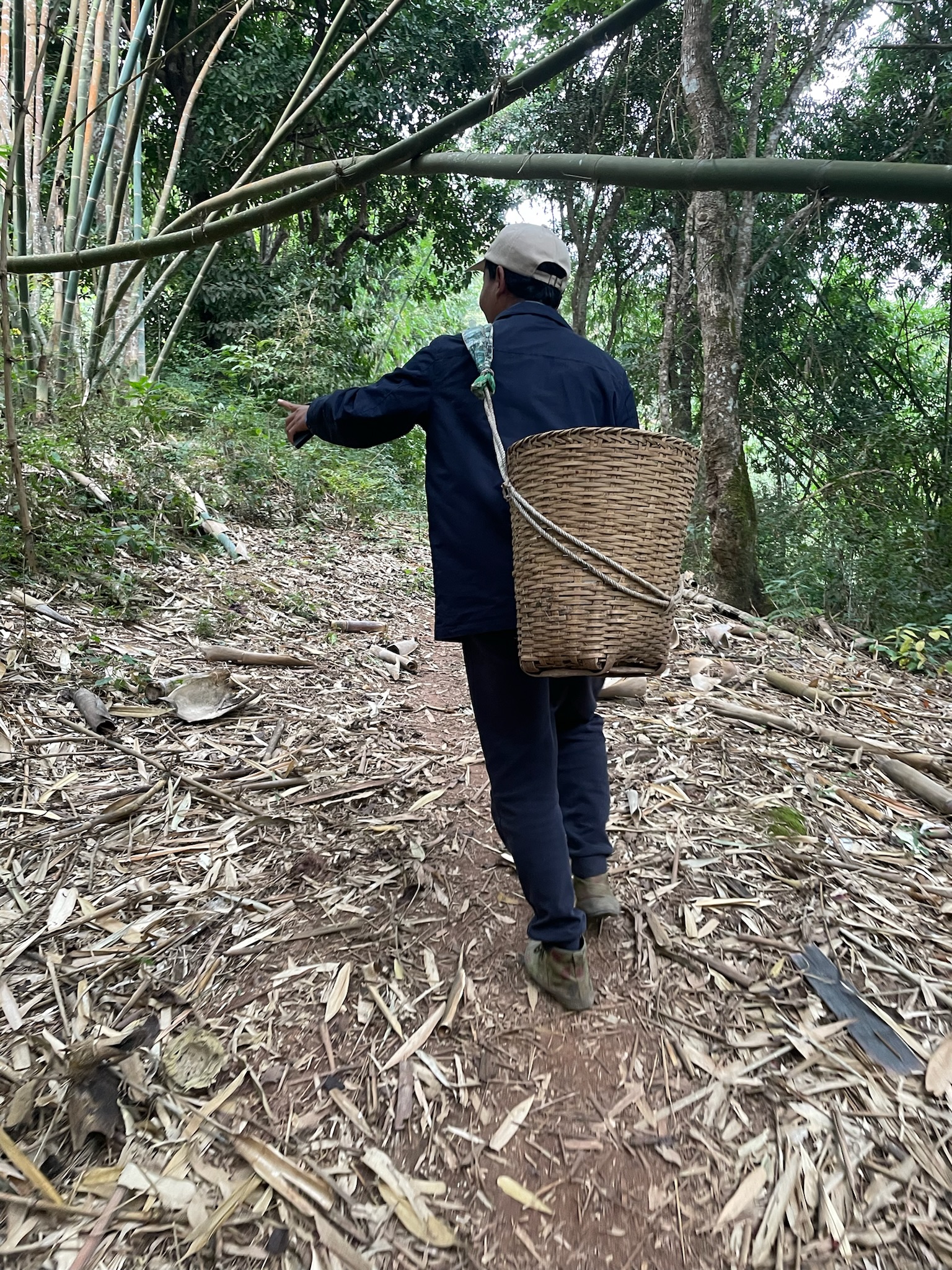
We wake up at 5am to the call of a rooster, but the sunrise wasn’t until 8am (no time zones in China and we are pretty far west). Our host makes us some eggs and a bowl of noodles with freshly harvested veggies from her garden. It comes with a side of chilies! 🌶️ A-Yun (阿云 – his moniker meaning cloud) is giving us a tour of his mountains today. We pack a few fruits, but he was mostly going to forage what grew in these mountains and snack along the way. No gels or bars!
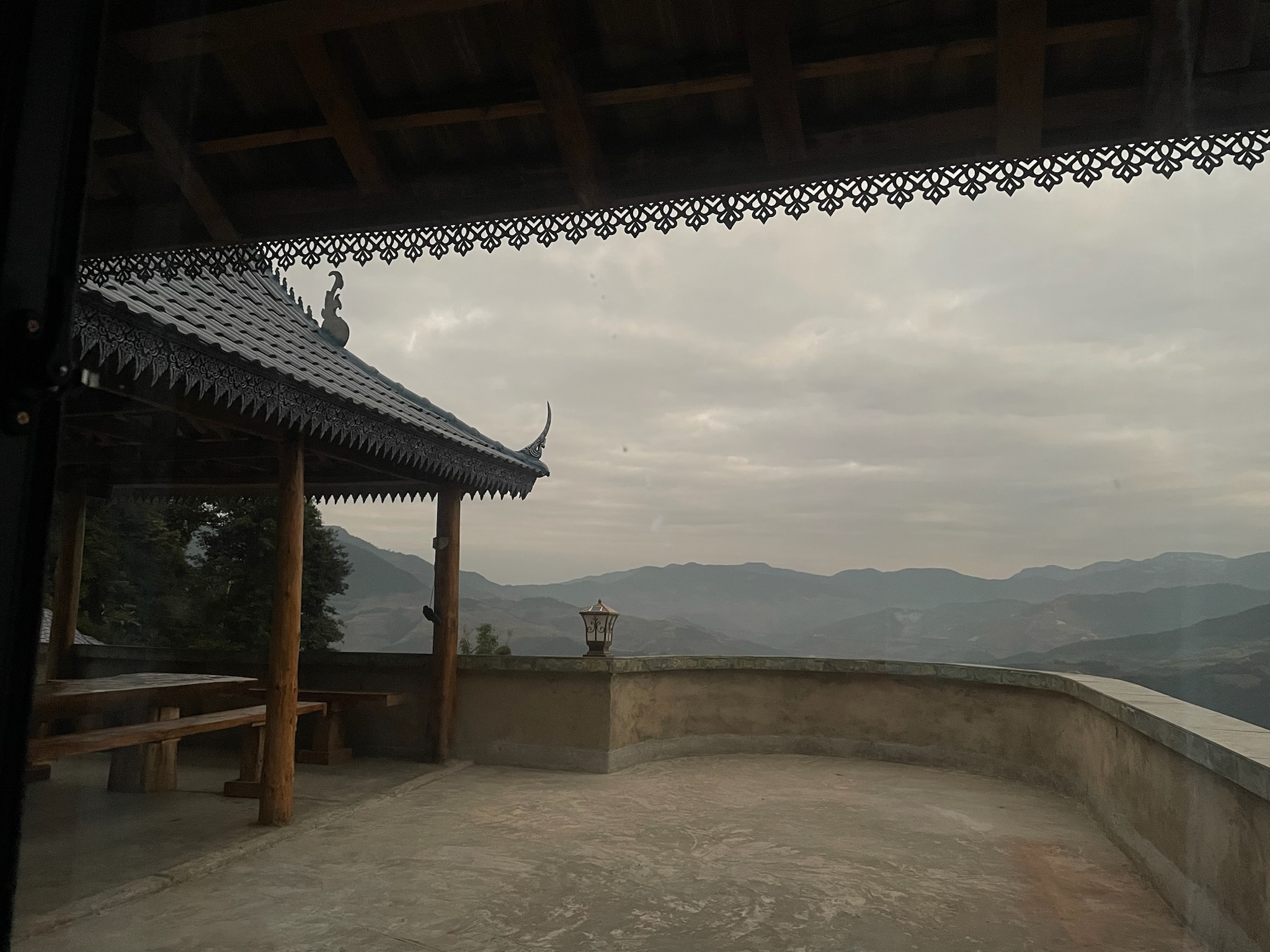
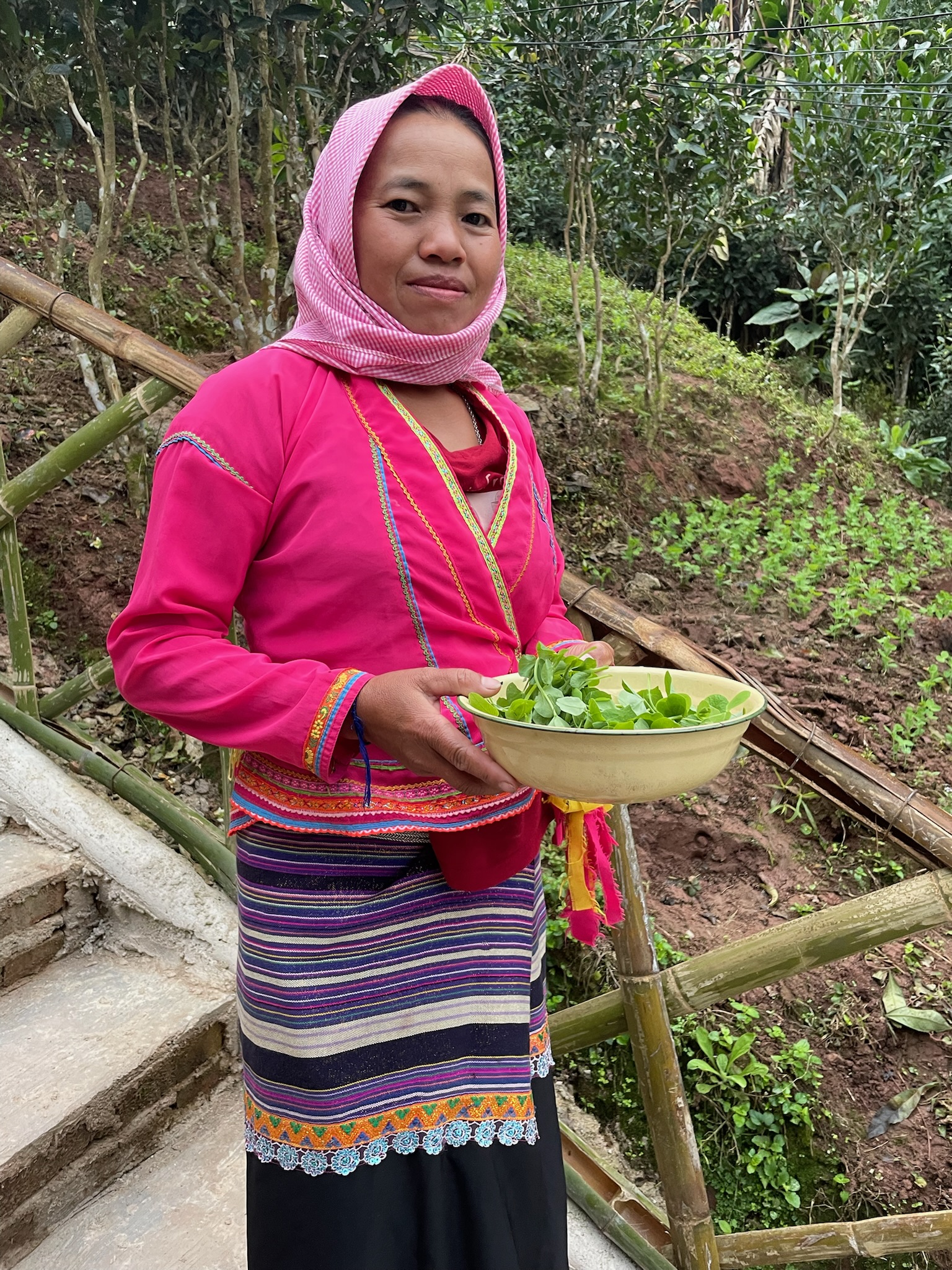
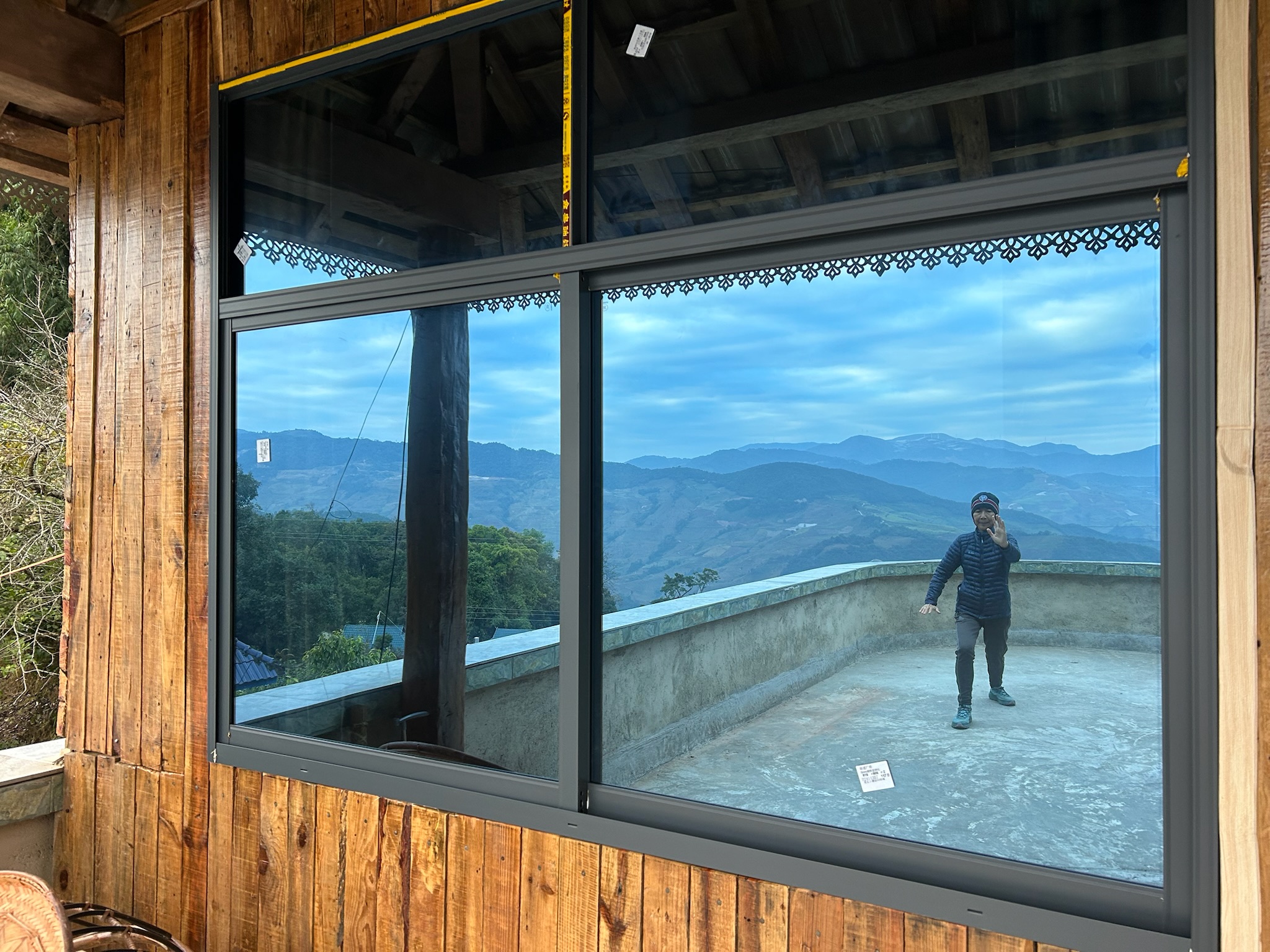
Yunnan: Mountains of Manwa Laozhai (曼佤老寨)
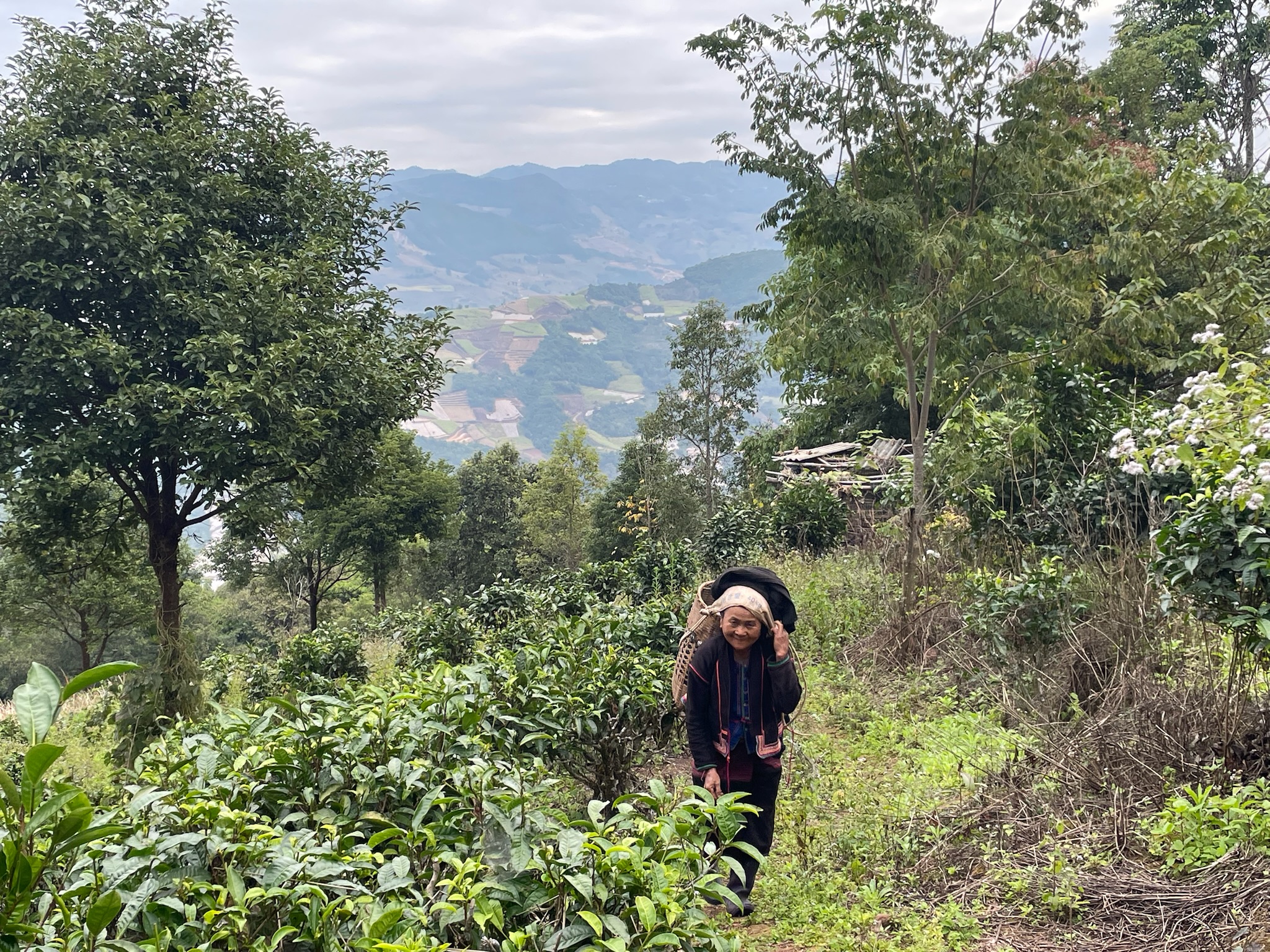
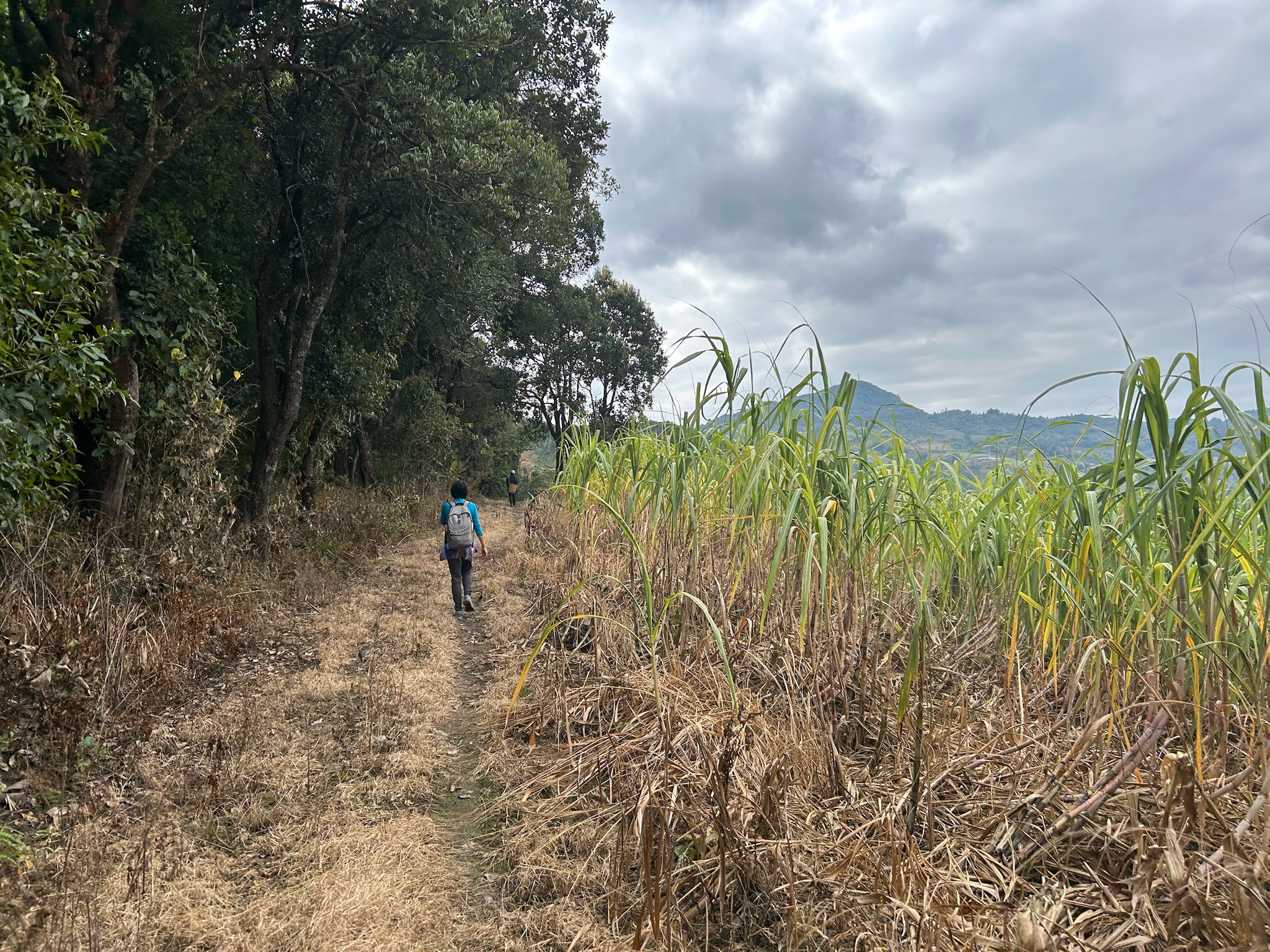
We walk into the village a bit and A-Yun makes a right turn leading us along a faint trail straight up the steep terrace, cutting through lines of sugarcane and tea. We see a sprightly 75+ year young woman gingerly making her way up with a basket on her shoulder. This is her morning walk to collect some young tea leaves. Who needs exercise when you are climbing up a 20% grade hill to forage for your breakfast! She makes it look so easy!
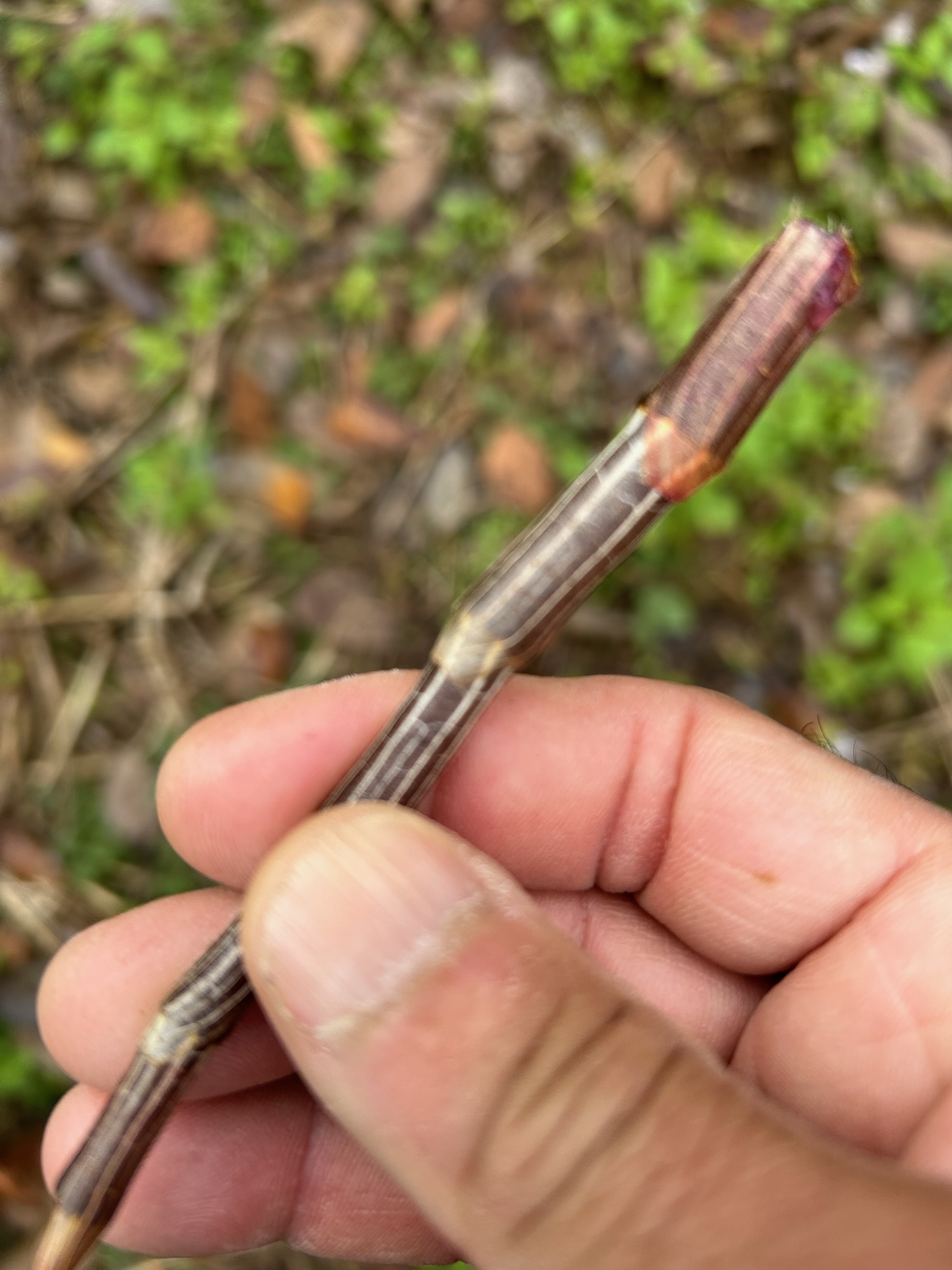
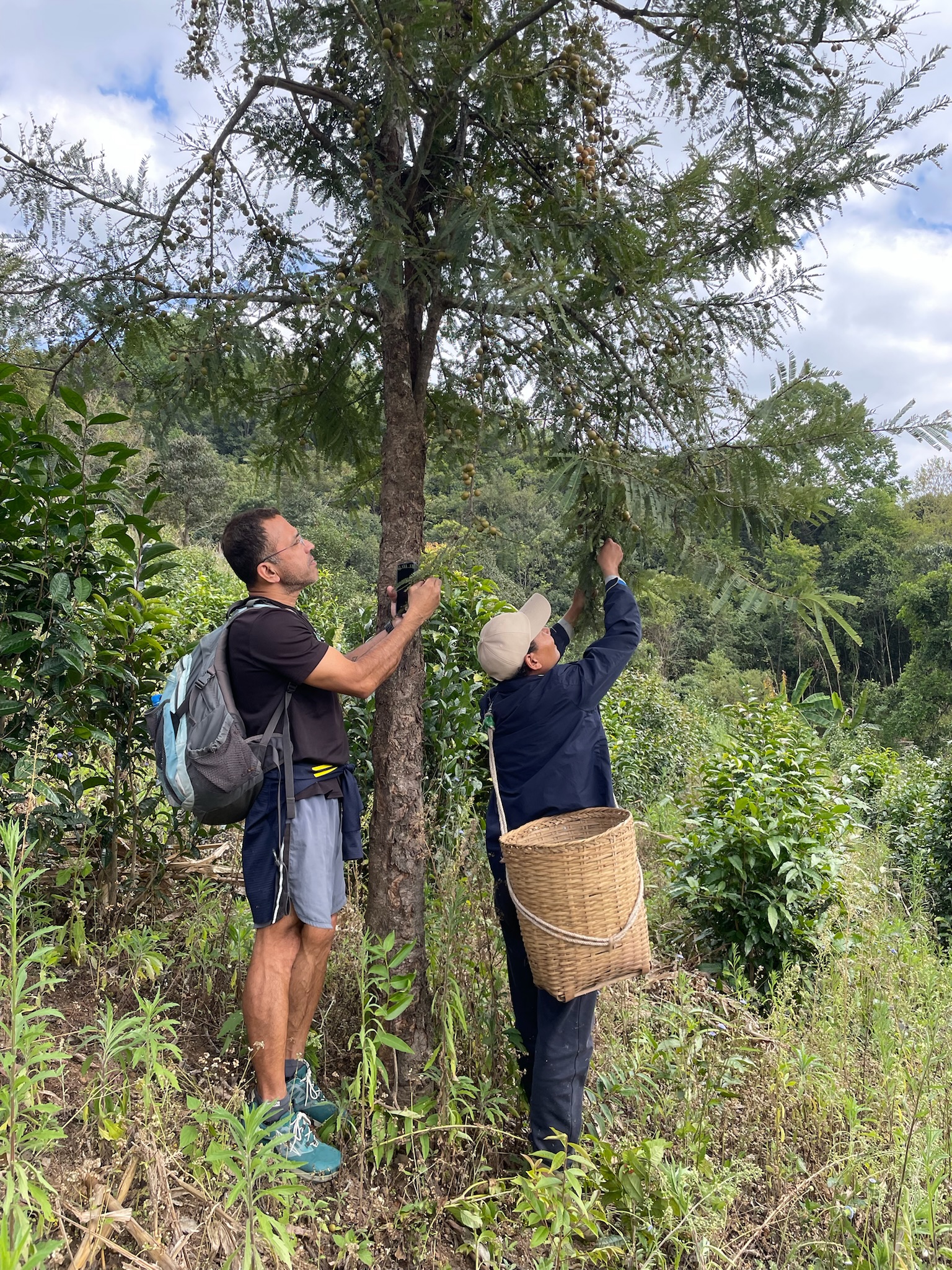
Every now and then A-Yun points to a shrub or a plant, plucks a leaf, stem or flower and tell us to try it. Some are good for the guts, others for the lungs, etc. Apparently he learned plant-ID (no iNaturalist here!) from these mountain jaunts with his grandpa.
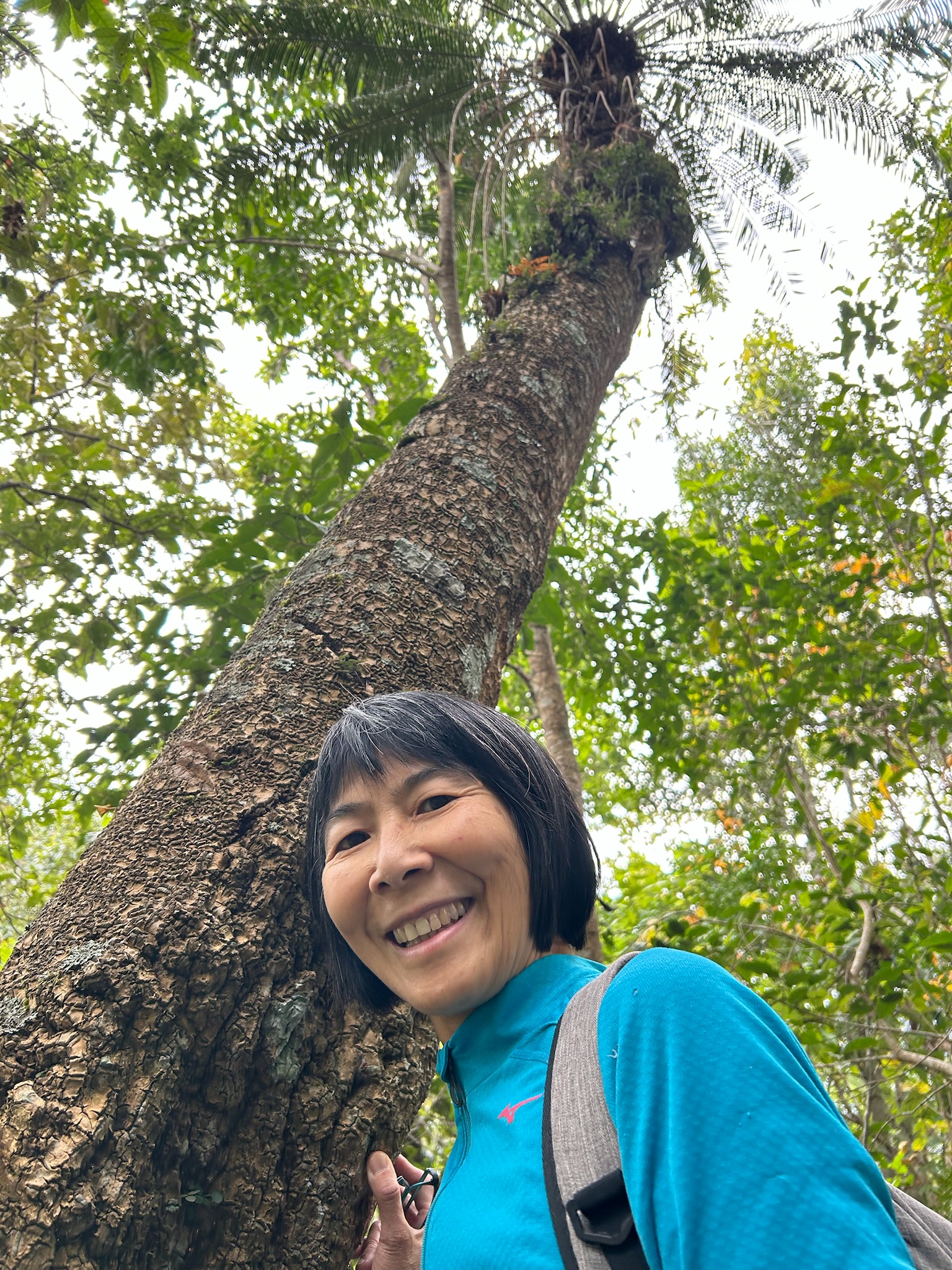
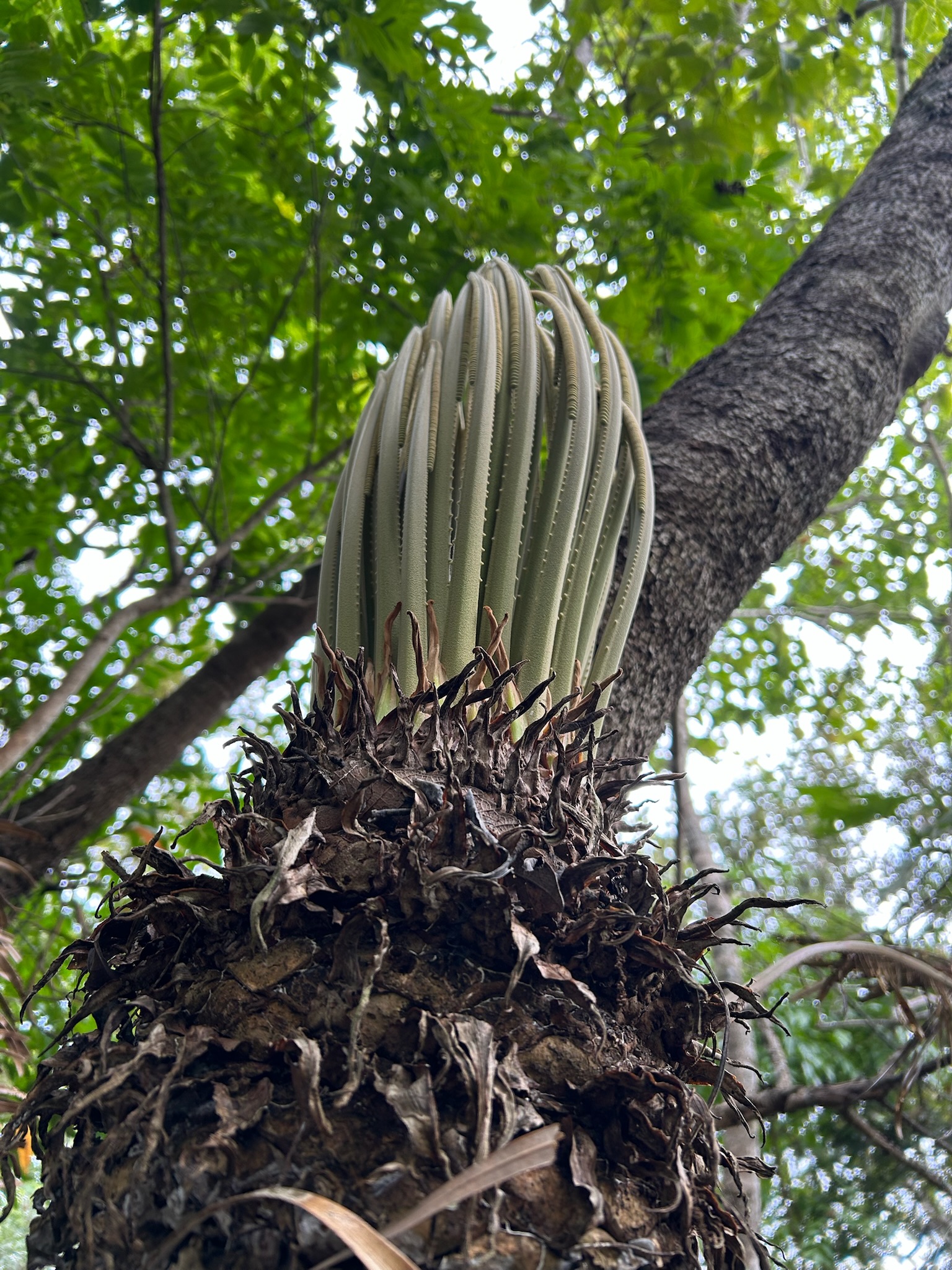
High up on the ridge, we see these large ferns, some 600 years old. A-Yun calls them dinosaur food, (a kind of cycads) since these plants (endemic to these mountains) have been around for a long time. Somewhere up on this ridge we hear some loud “miaos” and catch a fleeting glimpse of a flock of white peacocks take off. Peacocks in general are very shy (and very loud) and we don’t really get a chance to get a pic.
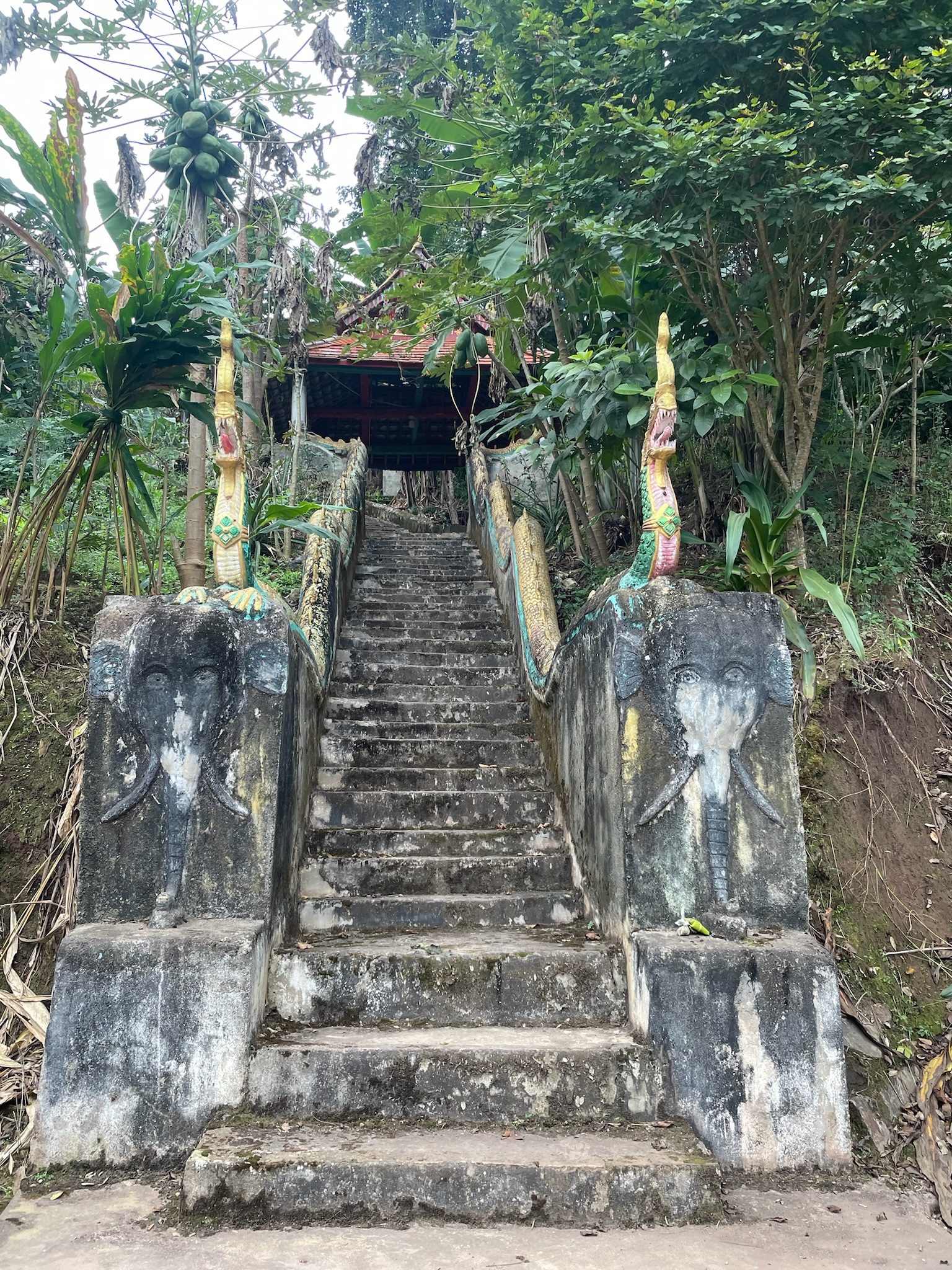
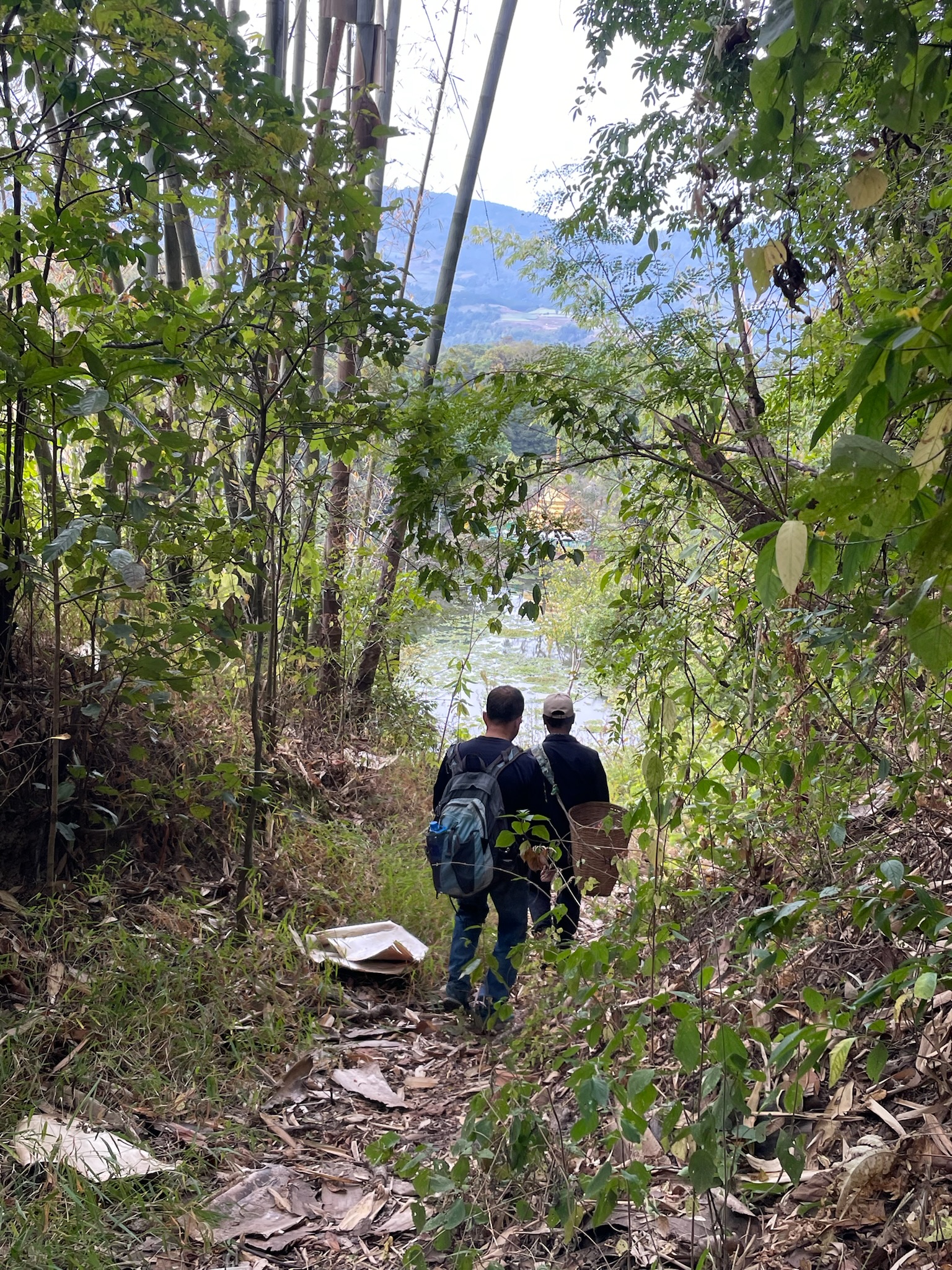
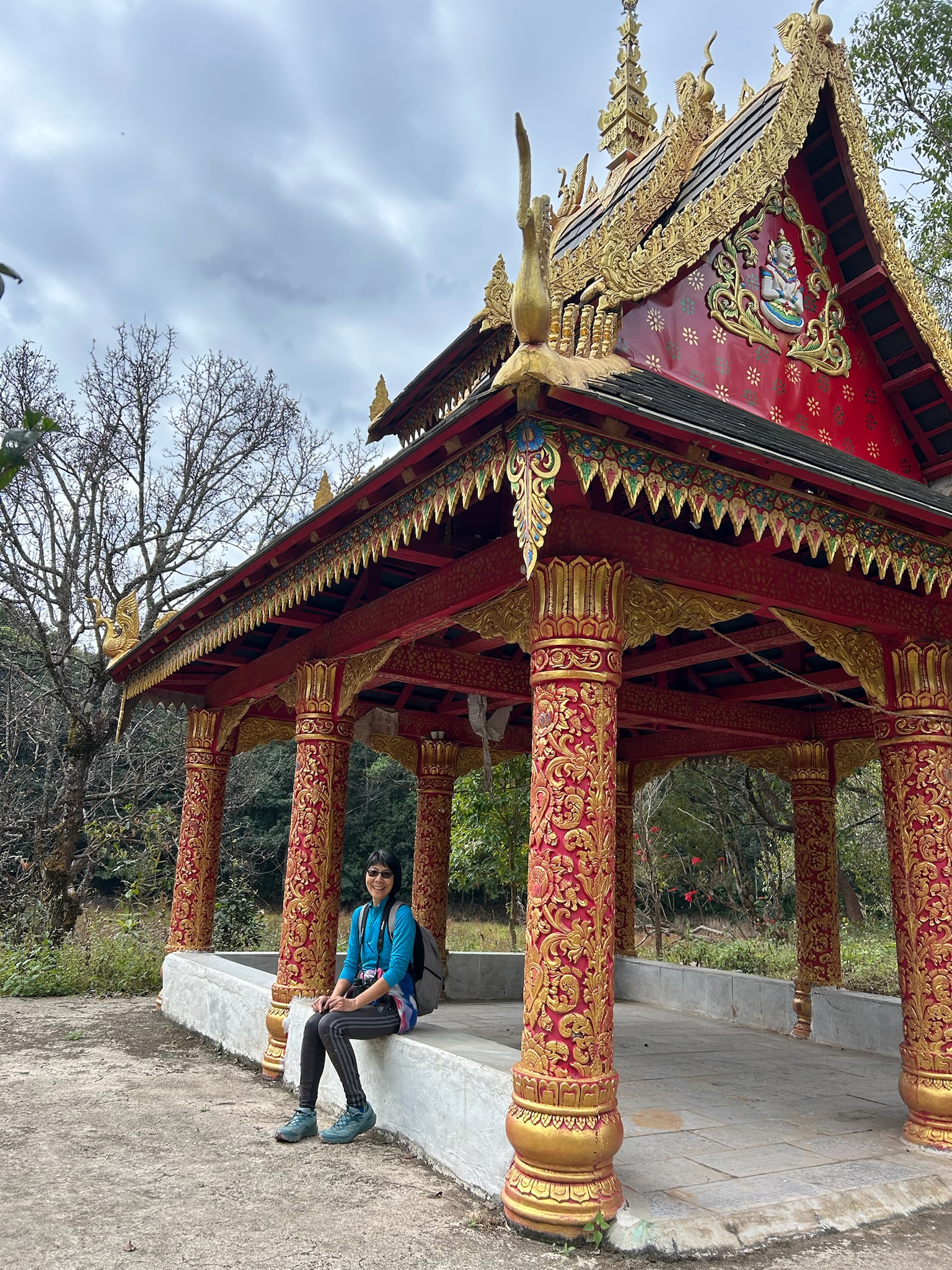
We descend down a little to a pond with another Thai-motif’d temple. This is where the Manwa Laozhai people celebrate weddings and other festive occasions. If we were to take the dirt trail back, it’s only a 30-minute walk to the village, but we took the scenic route and we’ve been walking for a few hours now.
A-Yun tells us that his people built this golden temple at the original location of their ancient village. Due to a natural disaster (likely earthquake), the ancient village was leveled and flooded, and a lake formed afterwards. His people pooled money and resources together and built this temple in memory of their ancestors.
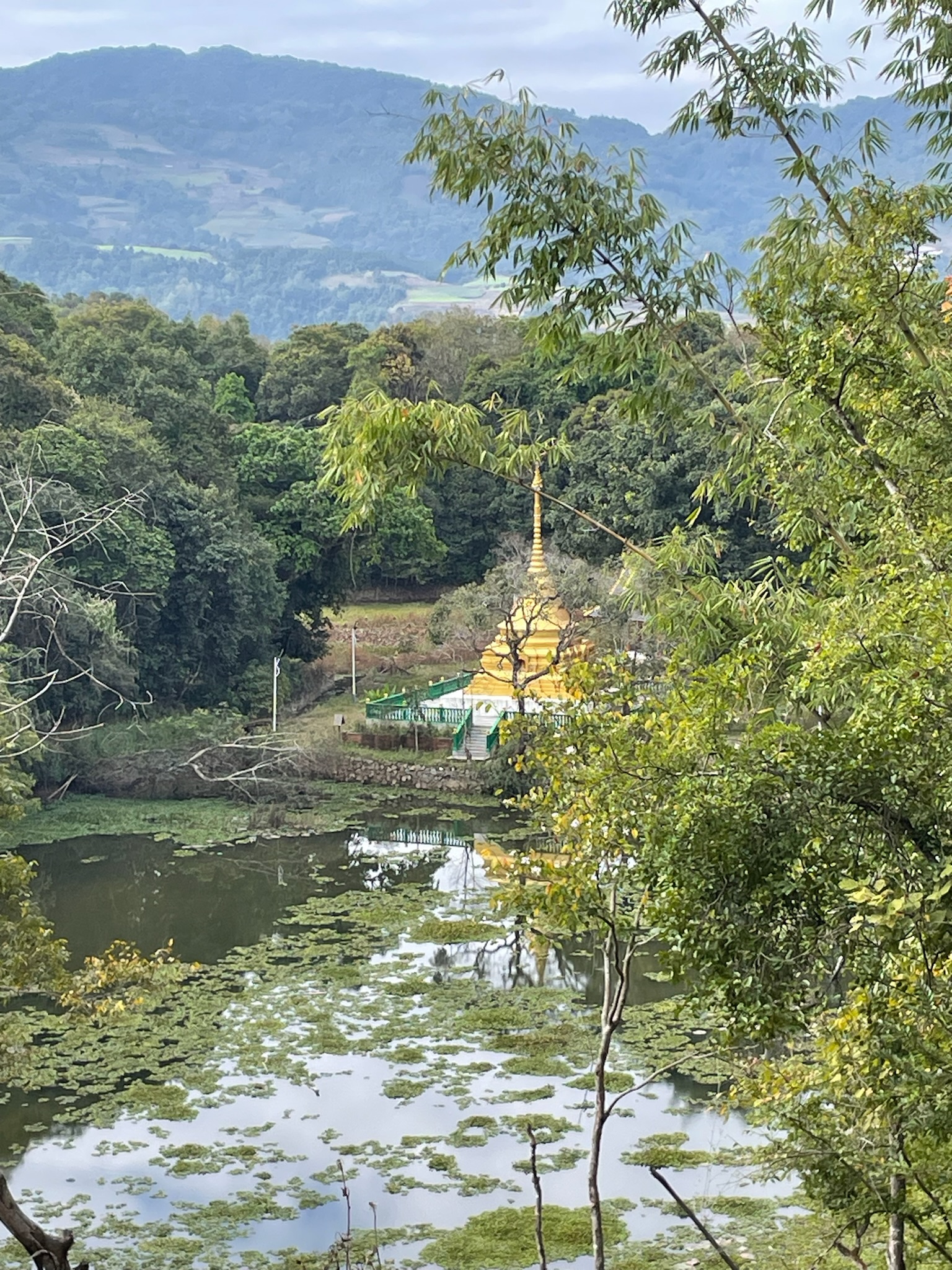
When they celebrate The Water-Sprinkling Festival (泼水节) in mid April, the biggest traditional festival in his culture, all the villagers would gather at the golden temple to kick off the festivities. They sing and dance, and then parade to the current village site to continue the 3-day celebration. At the head of the parade is usually a knife dancer, who would lead the way. Turns out we will get to meet a knife dancing legend in Jingmai (景迈) tomorrow.
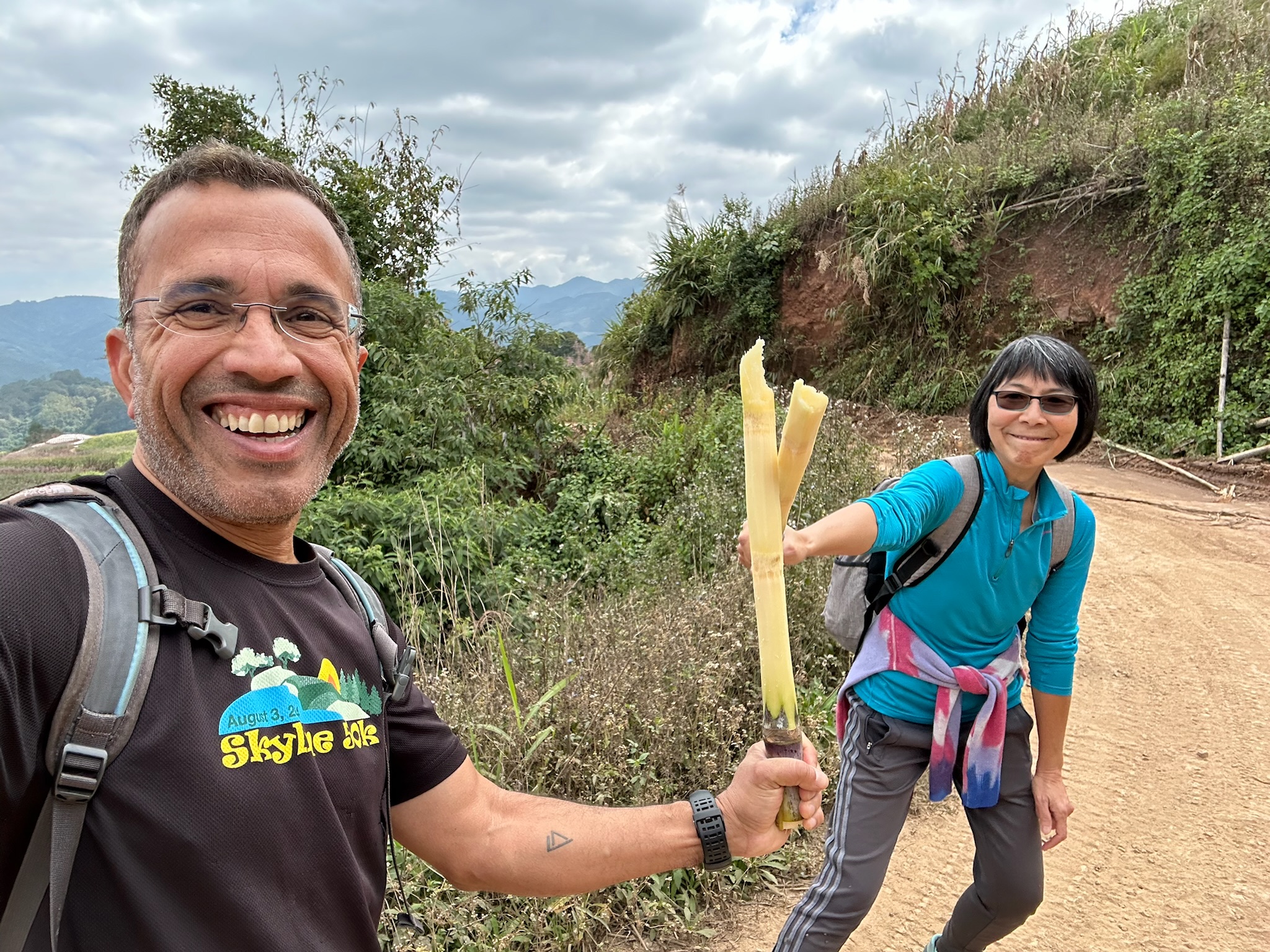
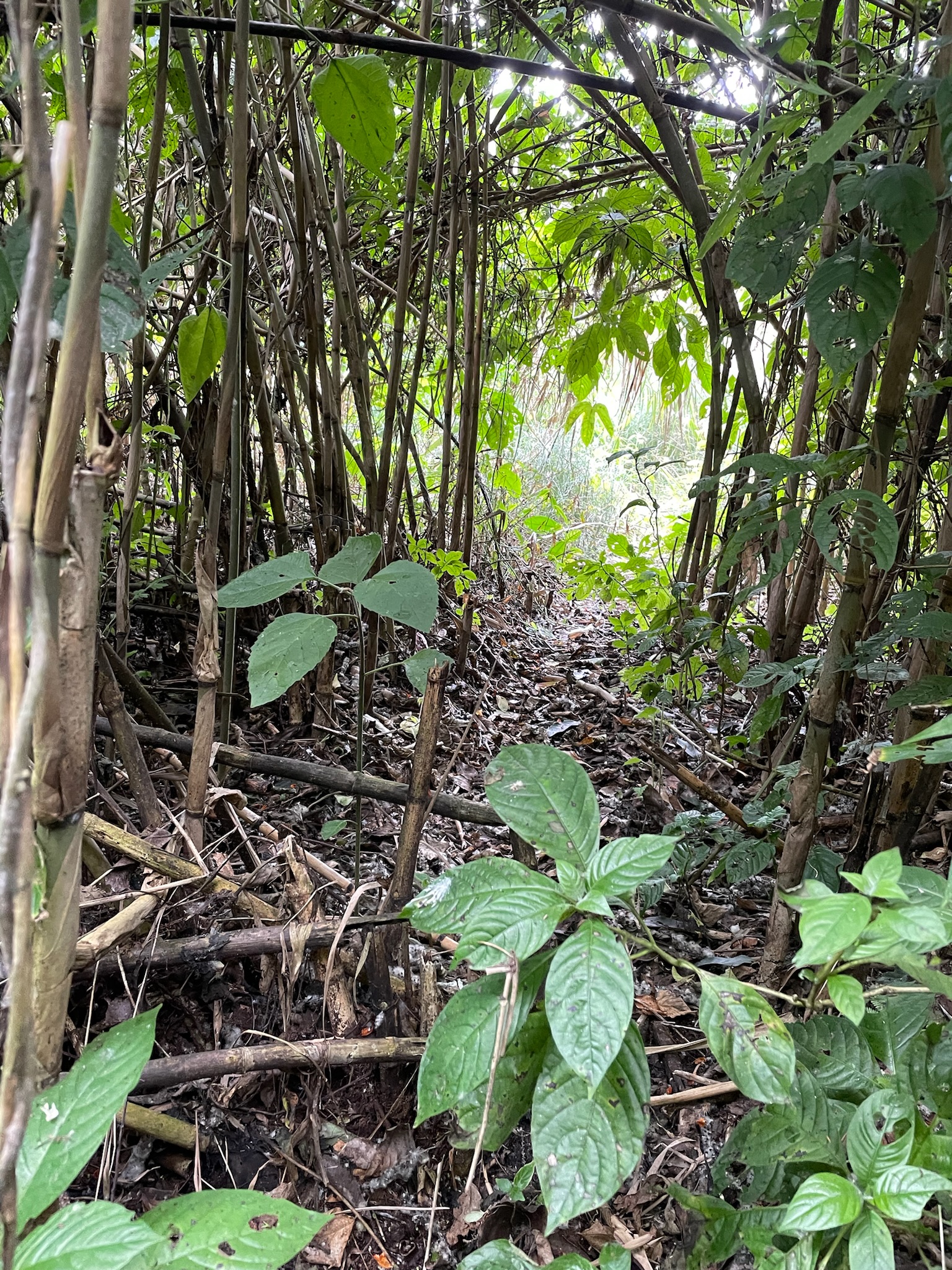
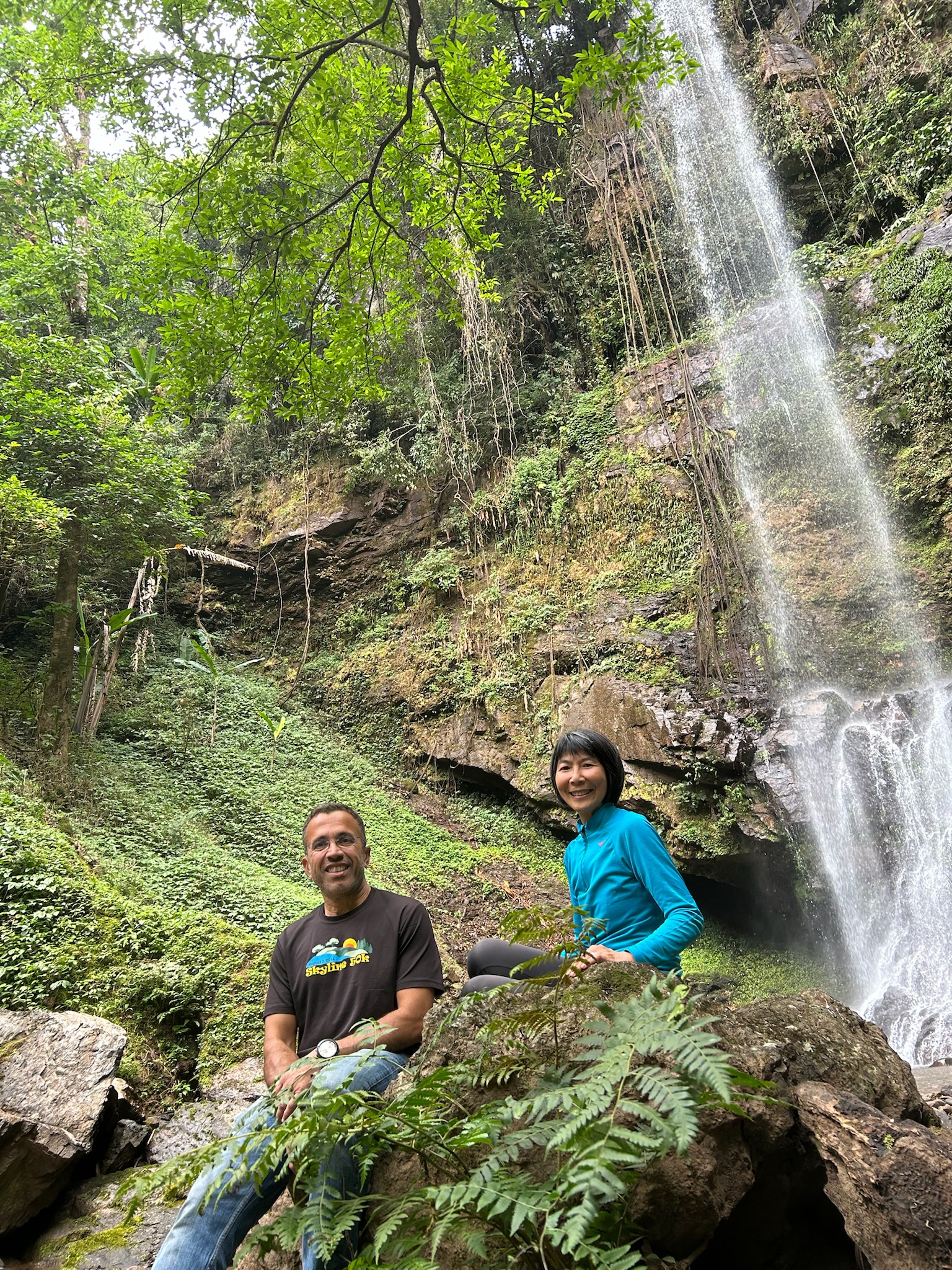
We climb again and come out of the forest into the terraces. A-Yun harvests a sugarcane for us and soon, some very tasty passion fruits. Snack time never felt so good! We soon descend down through thick foliage towards a waterfall and stop for another snack break, this time eating the fruits we packed. A-Yun has to use his machete to clear out the overgrown trails for us.
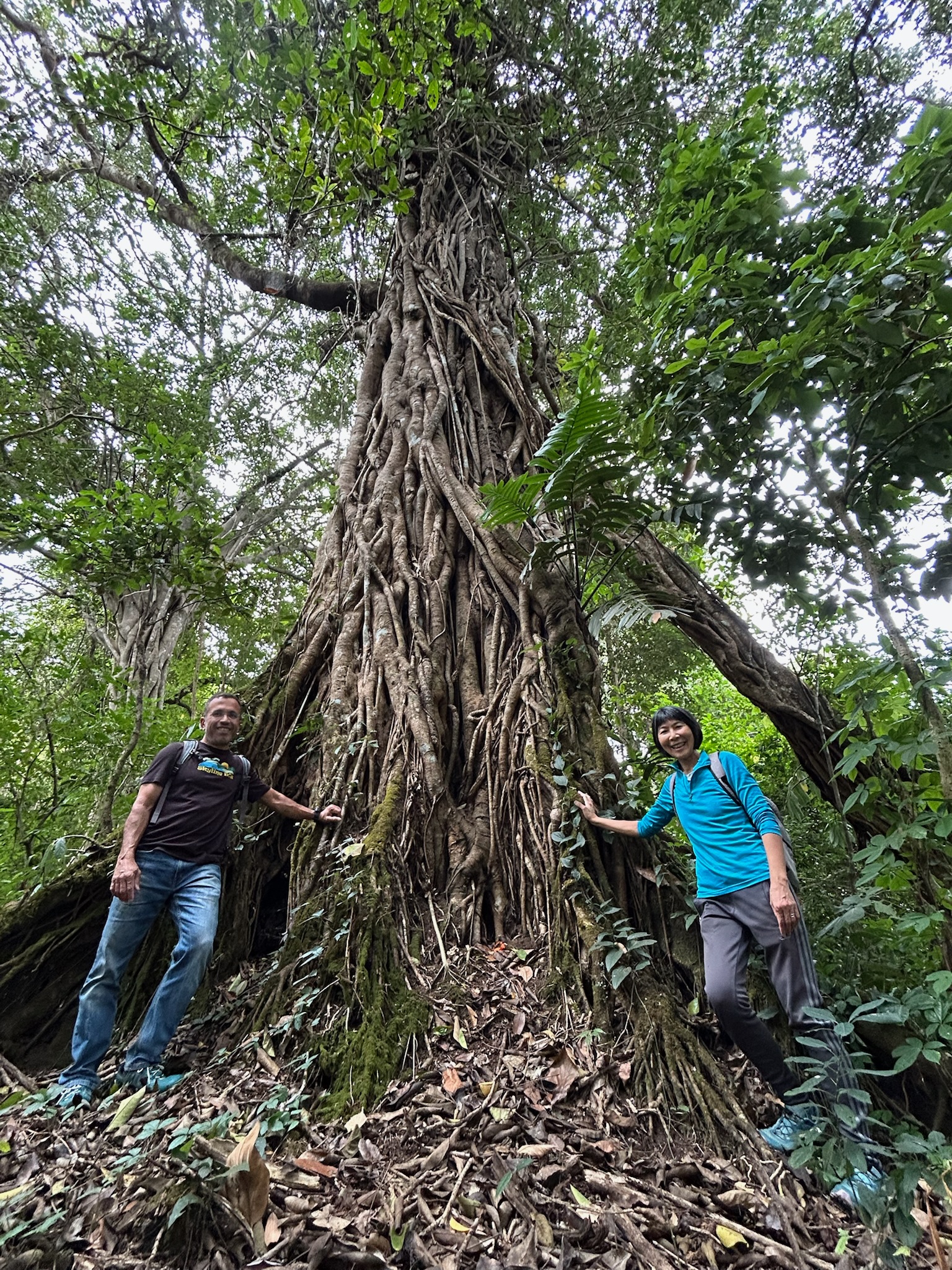
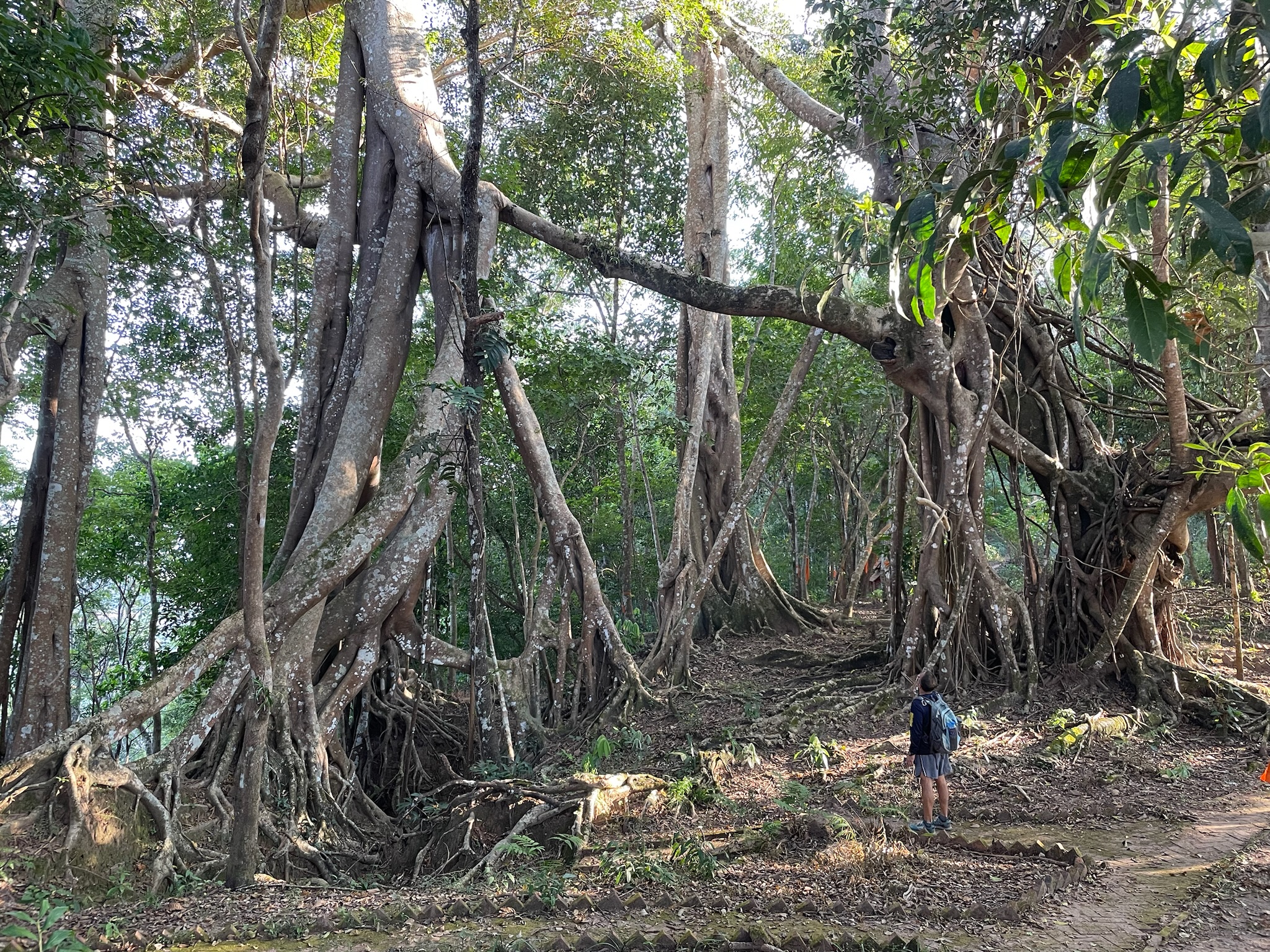
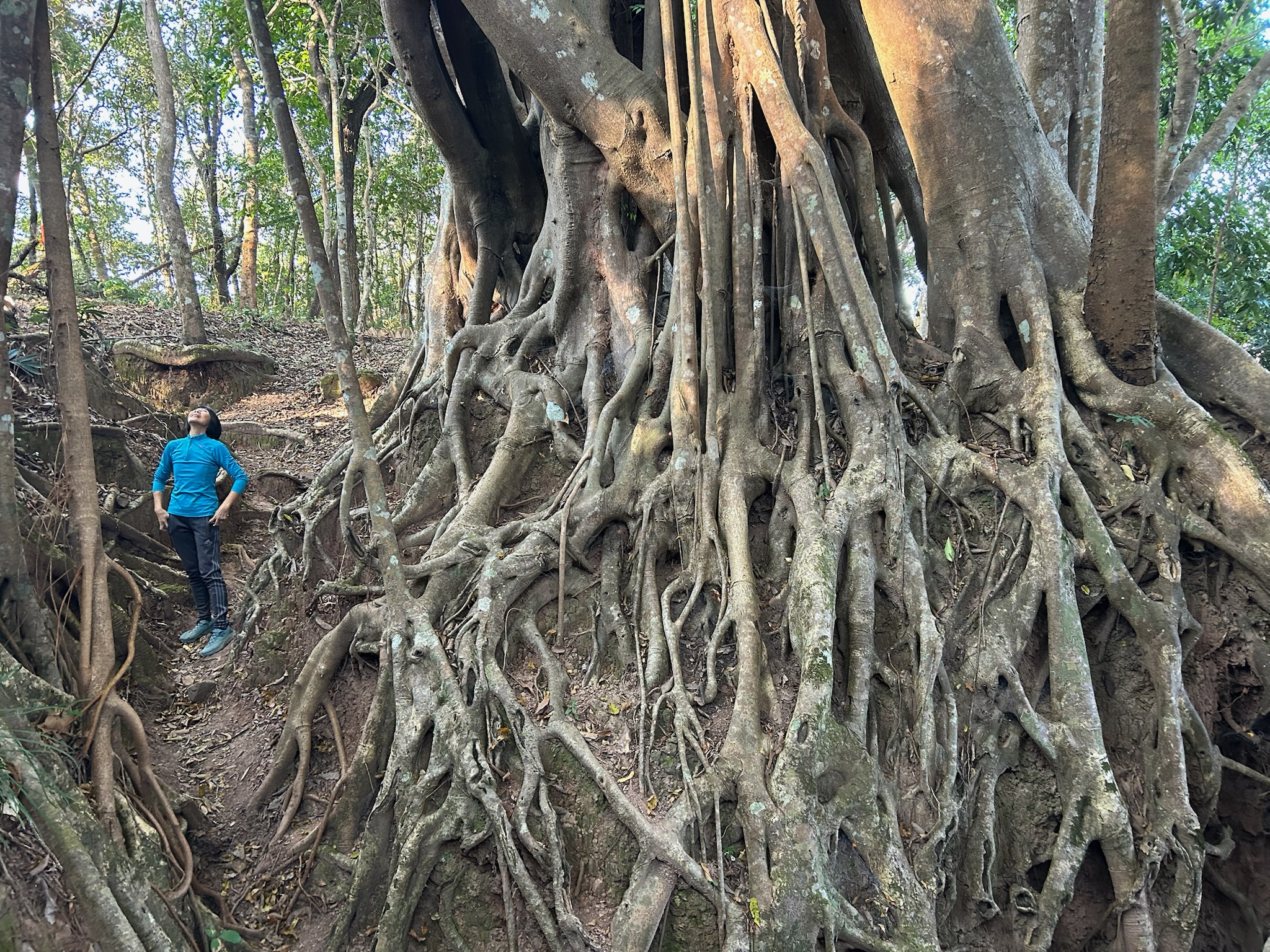
We slowly climb back out and leisurely head towards the village. A-Yun takes us to the “king tree”, a spectacular “grove” of strangler figs, but really one huge tree that has put down shoots/branches across a wide area. This tree is considered sacred and no one dare cut anything or harvest anything from it.
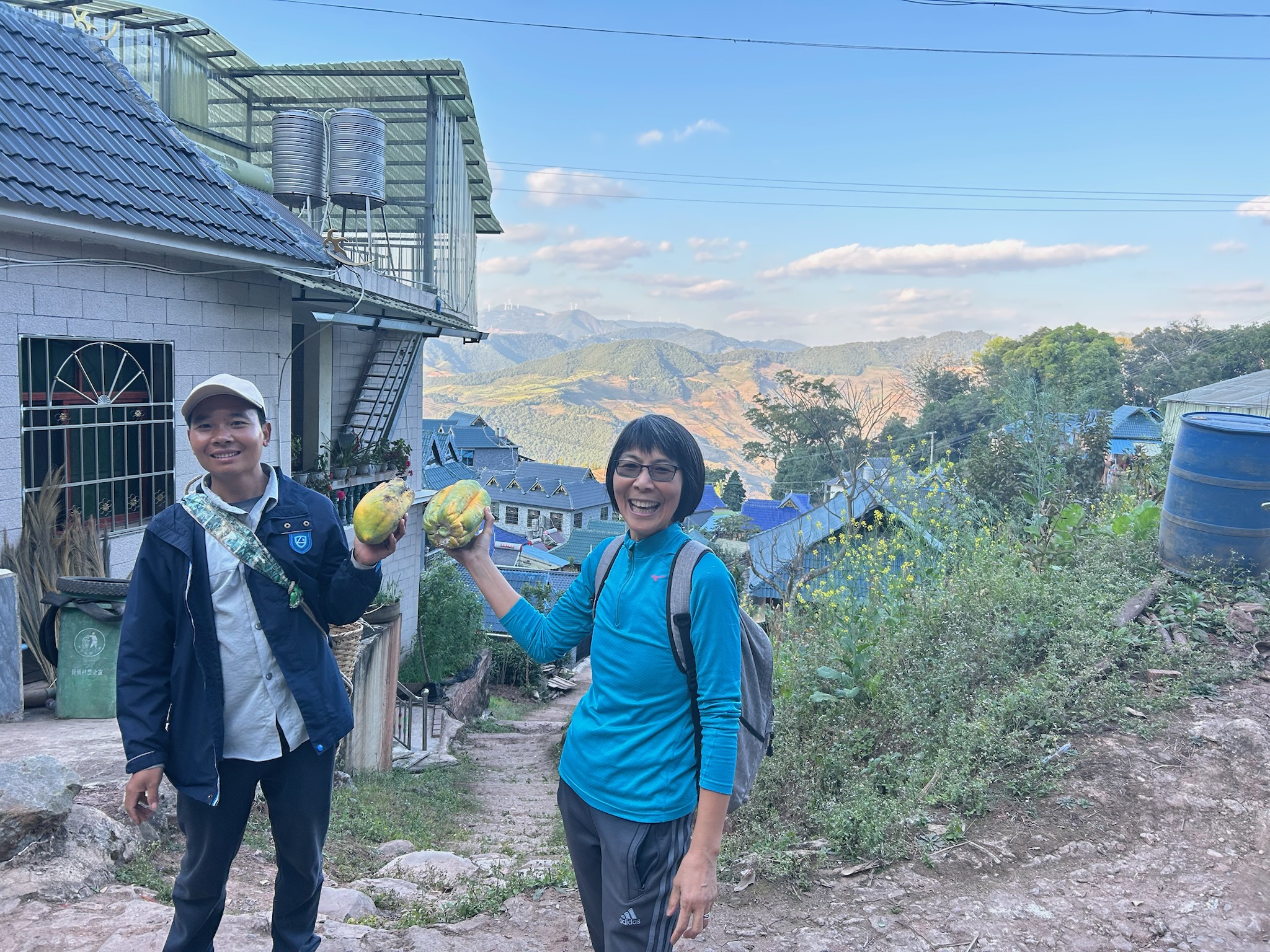
After 7.5hours, 10+ miles and 4,500ft of gain/loss we eventually make it back to our room, rewarded with freshly cut papayas. After dinner, we are treated with an amazing farewell, with local performers singing around the fire with roasted heirloom soybeans and some stiff corn moonshine 玉米白酒. I feel such a kinship with these folks, their easygoing nature, communal living, happy outlook and living everyday in nature, with nature. Do we have to leave and go back?
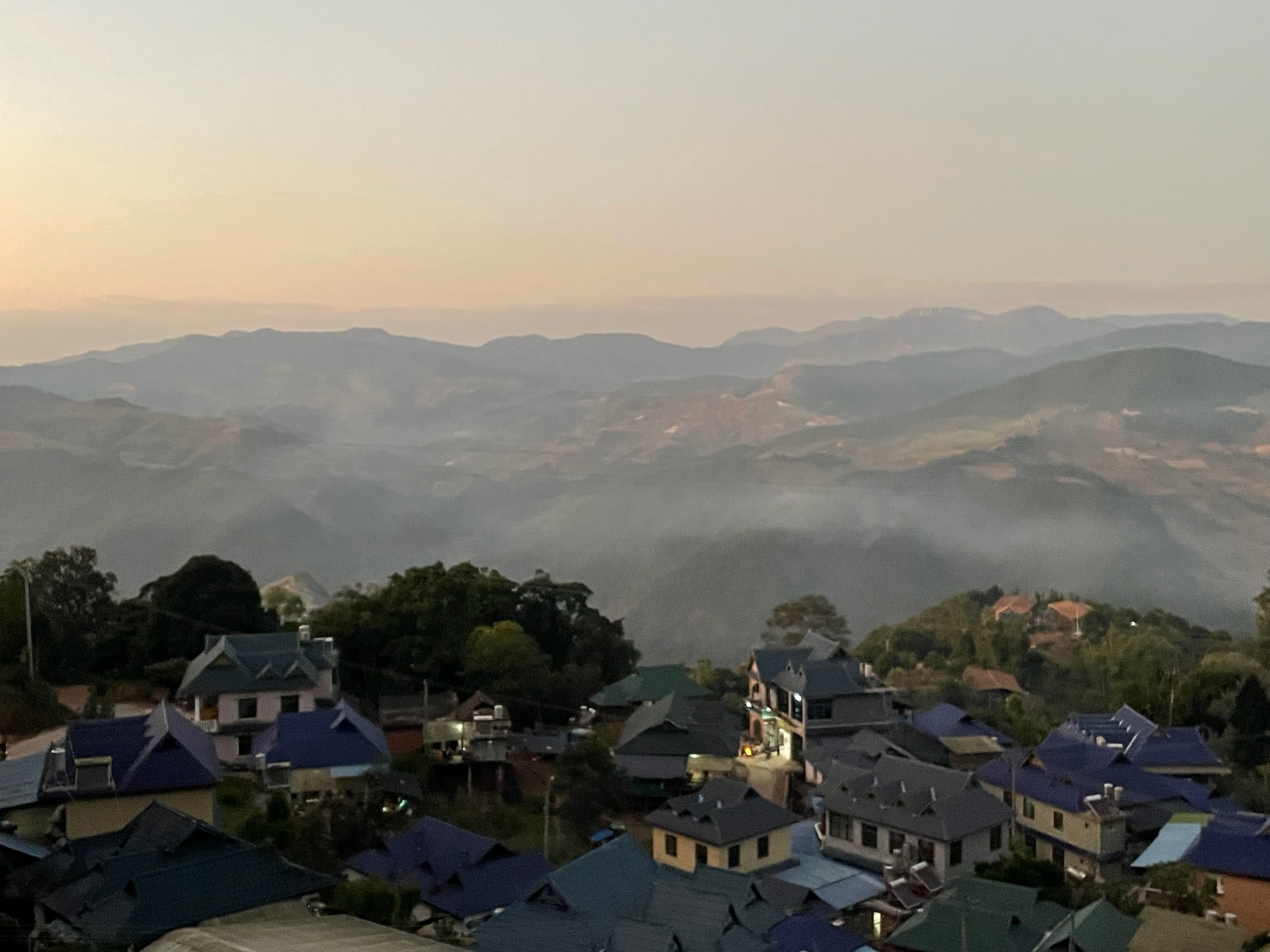
Kammy and I are both pooped after the long day. Tomorrow we get to explore the Canyons of Manwa Laozhai and then drive out to Jingmai 景迈, an ancient tea forest. Hope we can get some sleep before the rooster goes off again at 5am.
This is a six part travelogue series exploring a section of Yunnan Province in China, from the autonomous prefecture of Xishuangbanna (西双版纳) to the remote village of Manwa Laozhai (曼佤老寨) and finally to the ancient tea forests of Jingmai (景迈).
- Xishuangbanna
- Village of Manwa Laozhai
- Mountains of Manwa Laozhai
- Canyons of Manwa Laozhi
- Ancient tea forests of Jingmai
- The Bulang People
Absolutely N.O. spam. No more than two emails each week. Learn about injury-free running, race reports, new trail routes, awesome recipes and amazing interviews.