This is a six part travelogue series exploring a section of Yunnan Province in China, from the autonomous prefecture of Xishuangbanna (西双版纳) to the remote village of Manwa Laozhai (曼佤老寨) and finally to the ancient tea forests of Jingmai (景迈).
- Xishuangbanna
- Village of Manwa Laozhai
- Mountains of Manwa Laozhai
- Canyons of Manwa Laozhi
- Ancient tea forests of Jingmai
- The Bulang People
Kammy and I have been exploring a segment of the Yunnan Province in China and after a couple of nights in the village of Manwa Laozhai (曼佤老寨), we arrive at the ancient tea forests of Jingmai (景迈). We check in to our hotel just in time for a spectacular sunset. The ethnic groups here have been cultivating tea for over 2,000 years! The oldest living tea tree here is around 800 years! Our friend A-Yun (阿云, his moniker meaning cloud) knows one of the tea growers (山宝) and that family is our host during our stay.
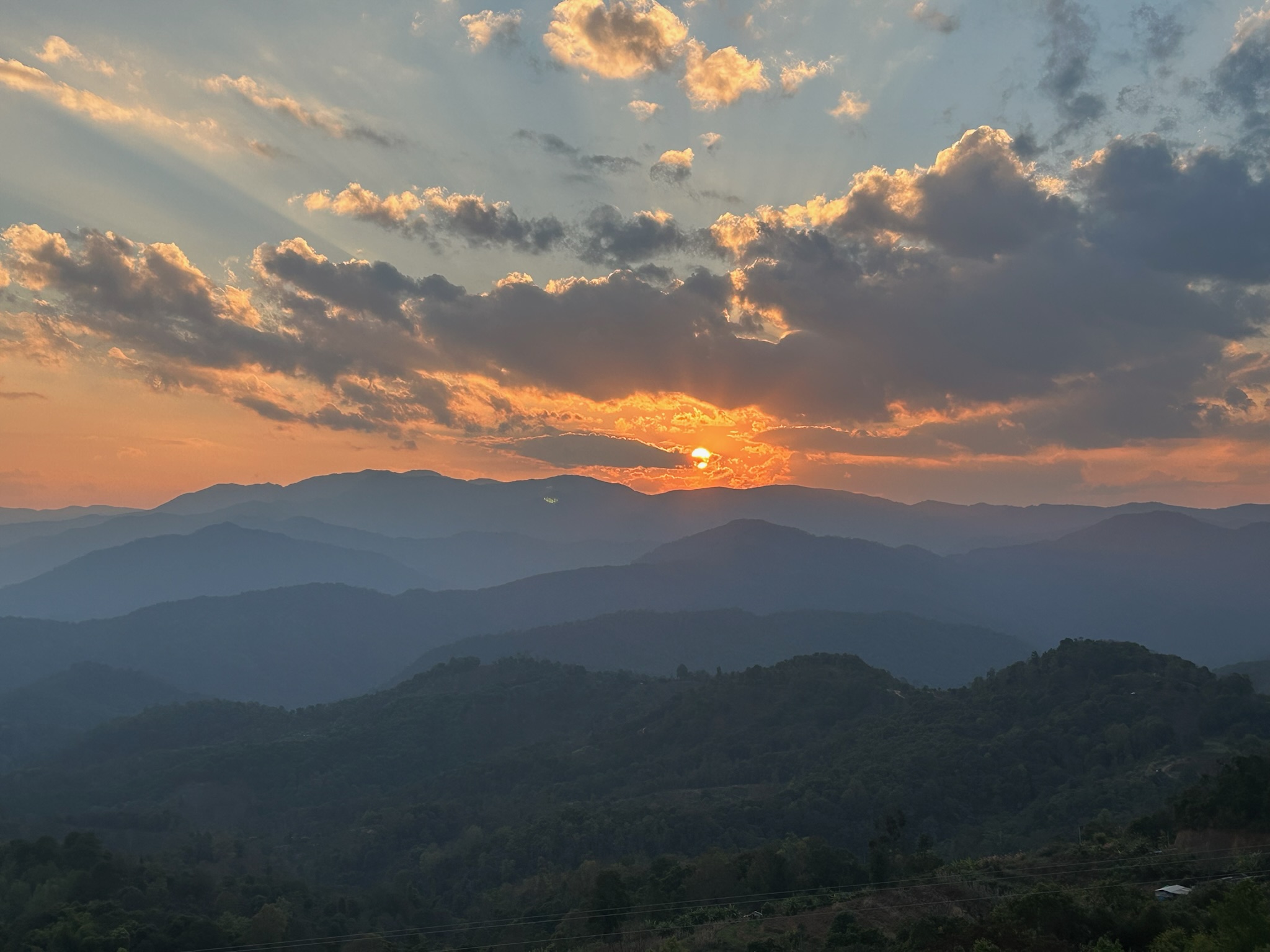
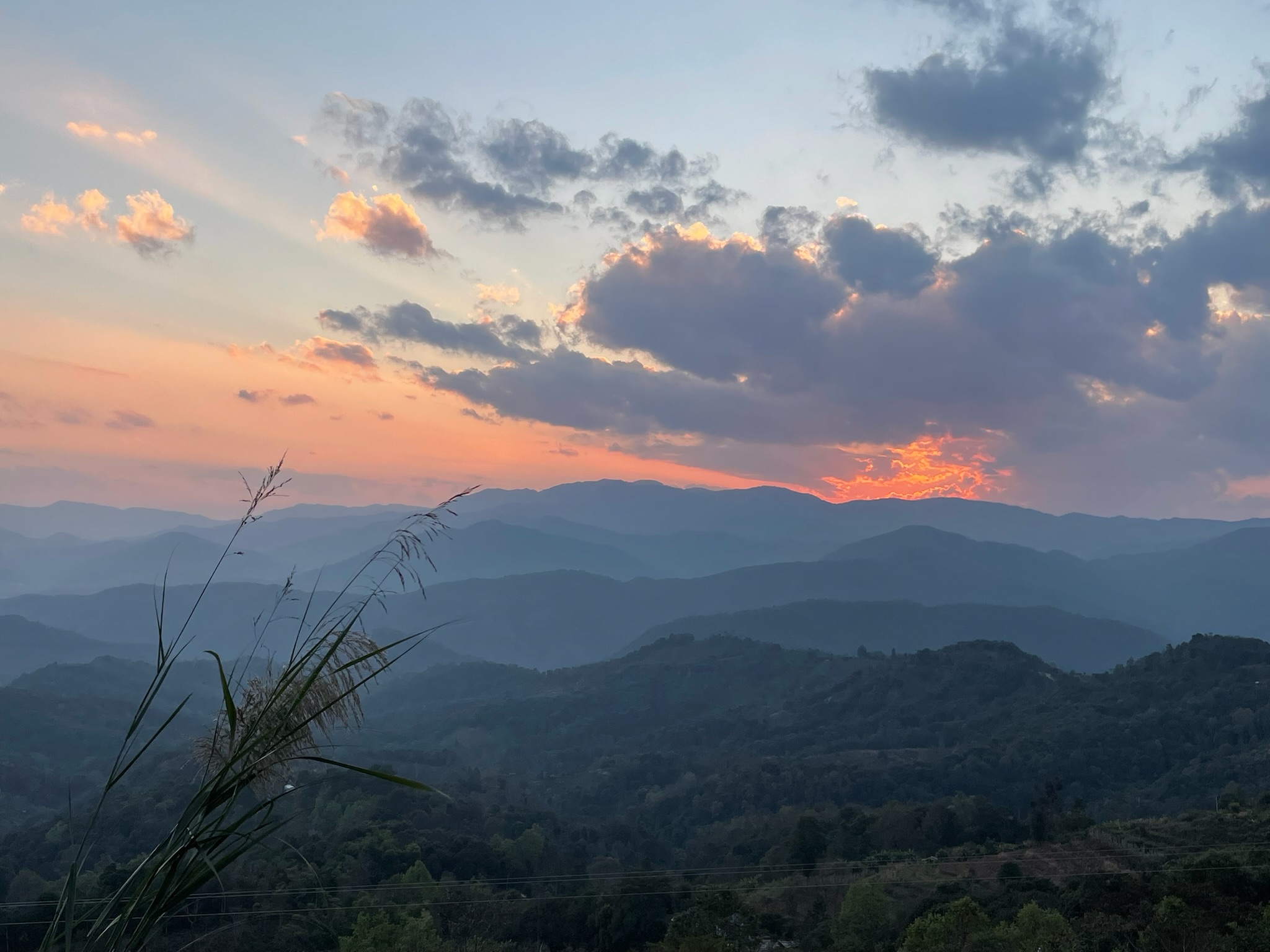
Yunnan: Ancient Tea Forests of Jingmai (景迈)
After the sunset, the host’s family treated us to a delicious dinner. We chat over dinner and then get invited to their home to taste their tea.
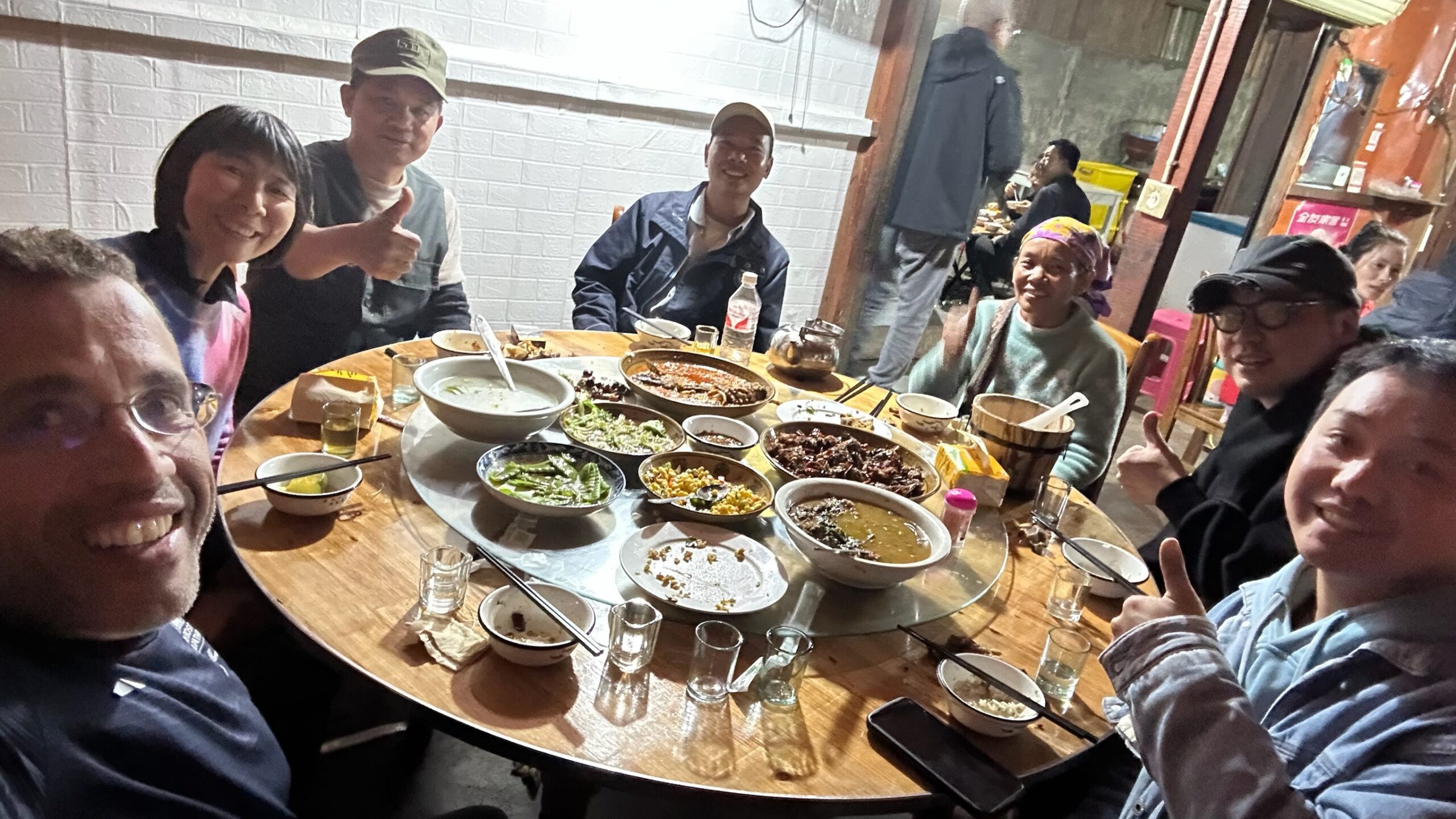
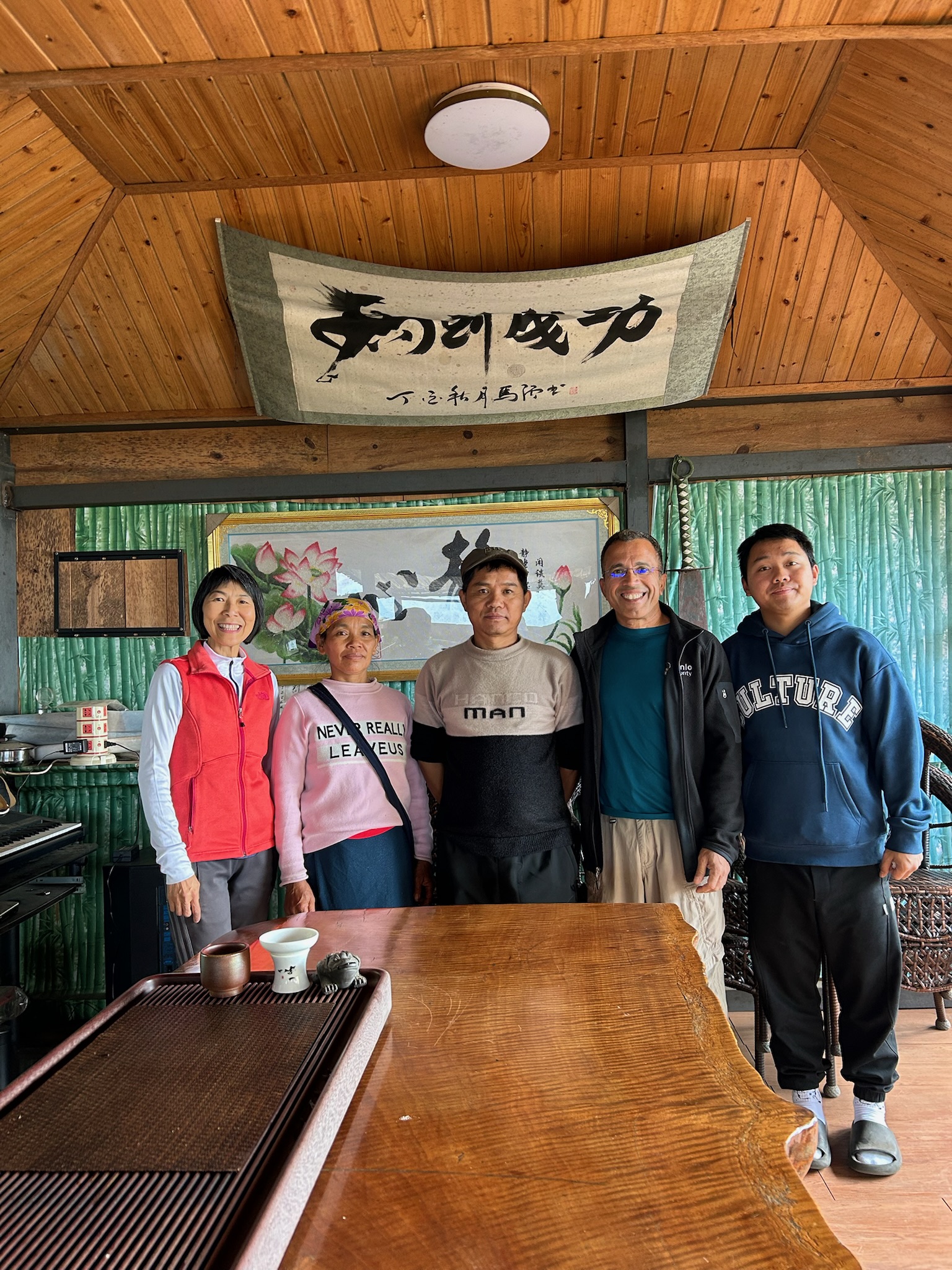
Tea tasting
The host’s family has been growing tea in the mountains for many generations. The host and his wife run their tea business. Their 25 year old son took a 3 year course in college with a tea equivalent of viticulture– history of tea, how to grow, how to brew, how to taste, etc. He’s back now helping with the family business. I have so many questions and with Kammy’s help in translating, he explains how they harvest the tree, brew times, taste testing, green vs. black tea, fermented vs. roasted, etc. I feel like I learned a ton in just a short amount of time. Though, all the caffeine that late in the day, didn’t help with our sleep that night.
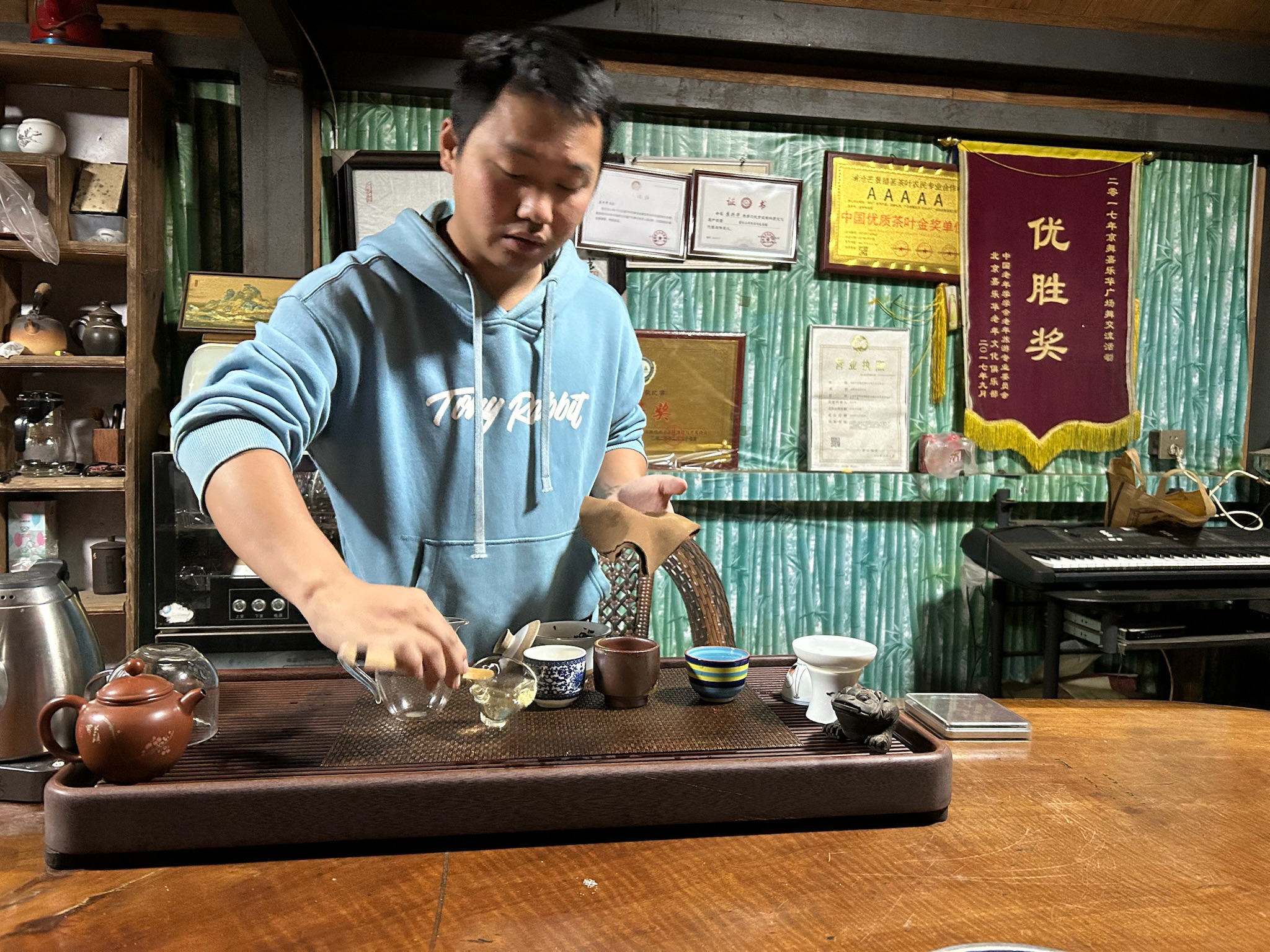

While sipping tea, our host 山宝 shows us a couple of videos of him performing a unique traditional Bulang dance called knife dance, which is a mix of martial art and dance. We learn that at every major festival, he’s the one who performs knife dancing at the head of his village’s festival parade. Since he is one of few knife dancers left, once a week he teaches boys in the village this unique dance, hoping they will be able to one day carry on this tradition.
Cloud Sea
One of the highlights of being up in these mountain is to witness the cloud sea (云海) and we were lucky the next morning. We wake up to a sea of clouds rolling across the ridges. The layered shades of the mountains is almost like a Chinese painting and far back was a ridge line across the Burma border!
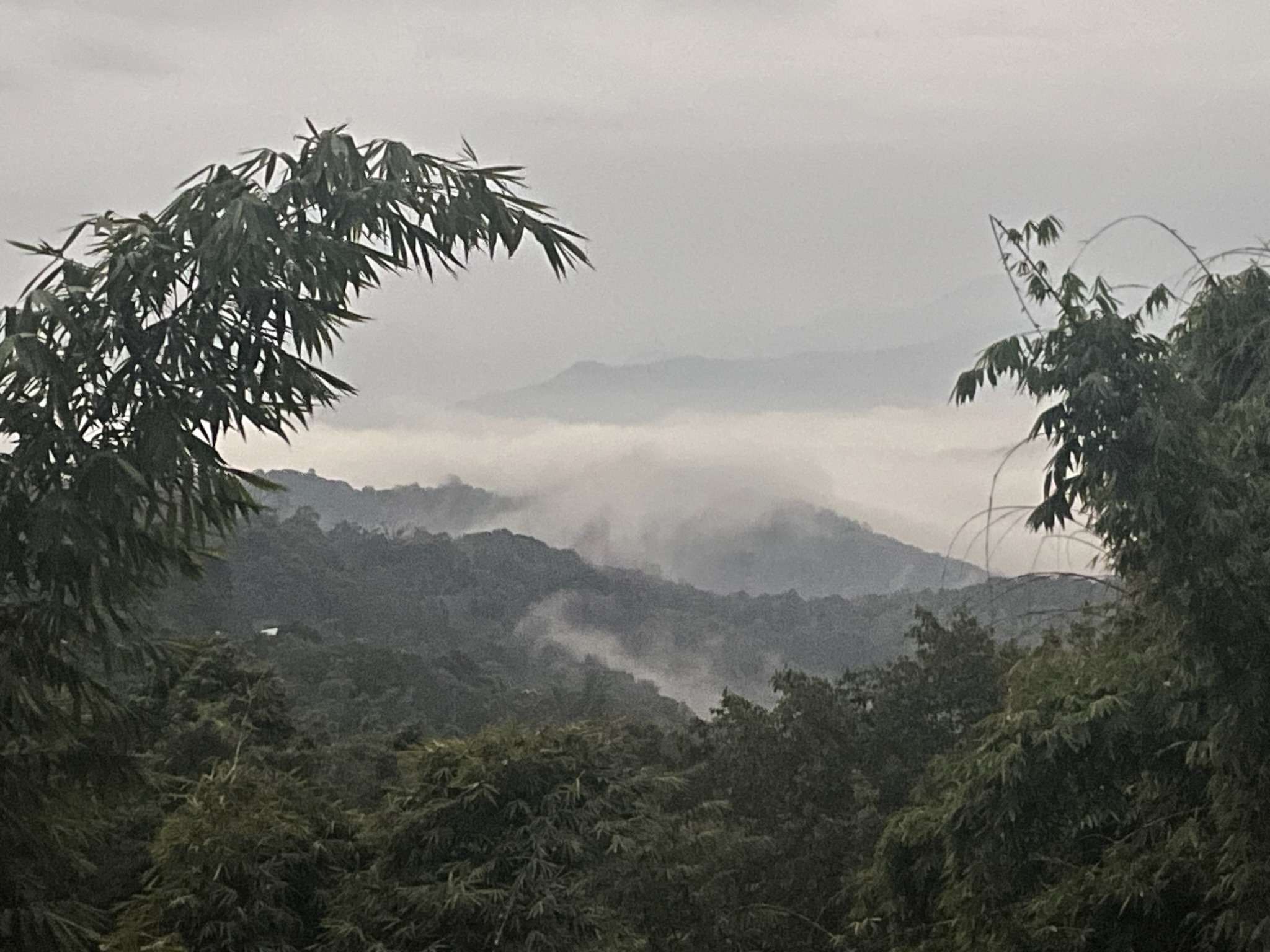
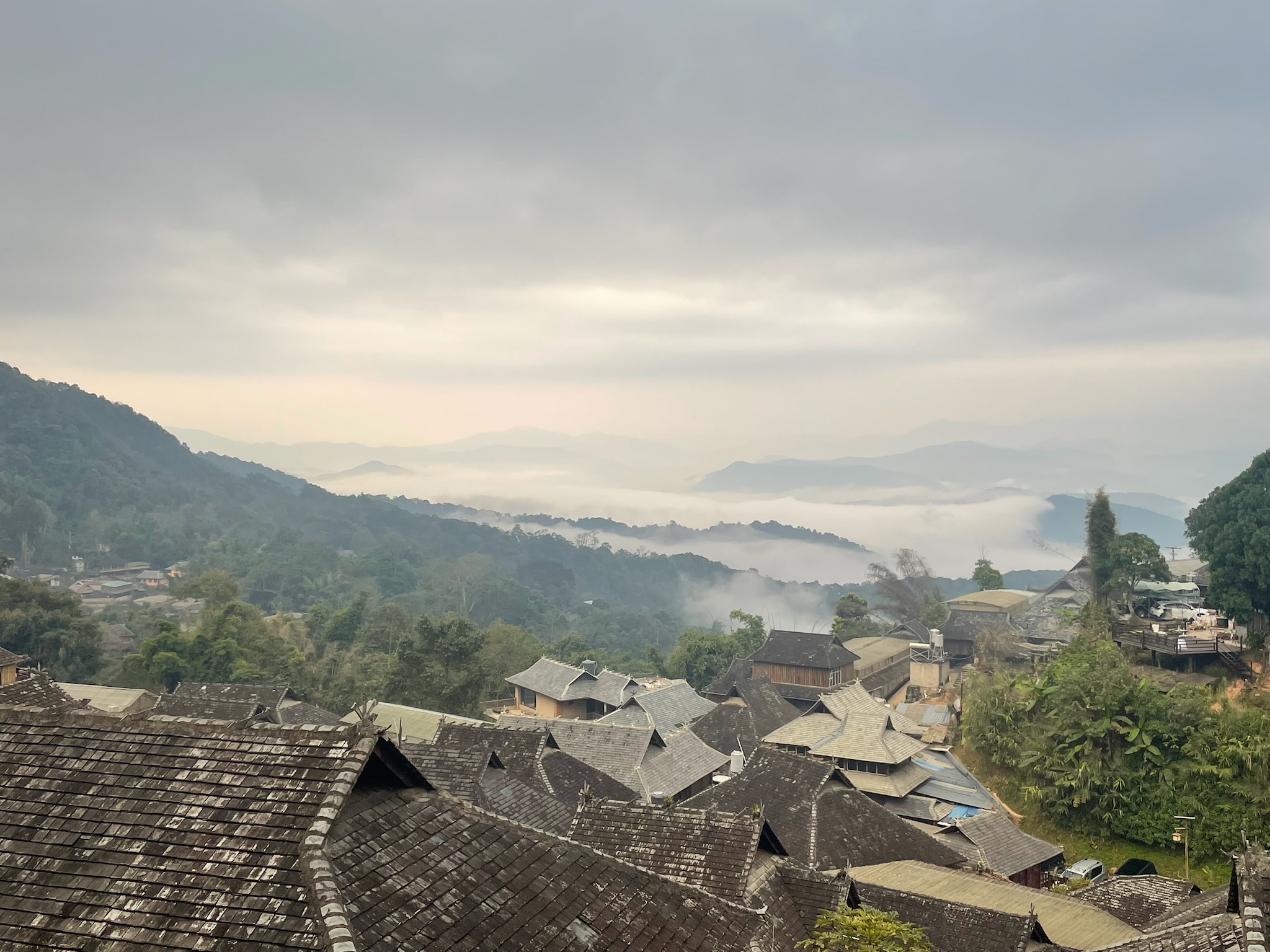
Our breakfast is noodles in a warm peanut soup, with veggies and additional condiments – the Sichuan pepper corn & spices makes my mouth numb!

Tea Forest
After breakfast, the host gives us a tour of the tea forest. We stroll up to the mountain top walking through the various plantations. The claim-to-fame of the Pu’er tea that’s grown here is that the tea is planted under the canopy of endemic trees. The shade, the undergrowth, mountain springs, insects and the whole ecosystem is what’s supposed to make this tea very special!
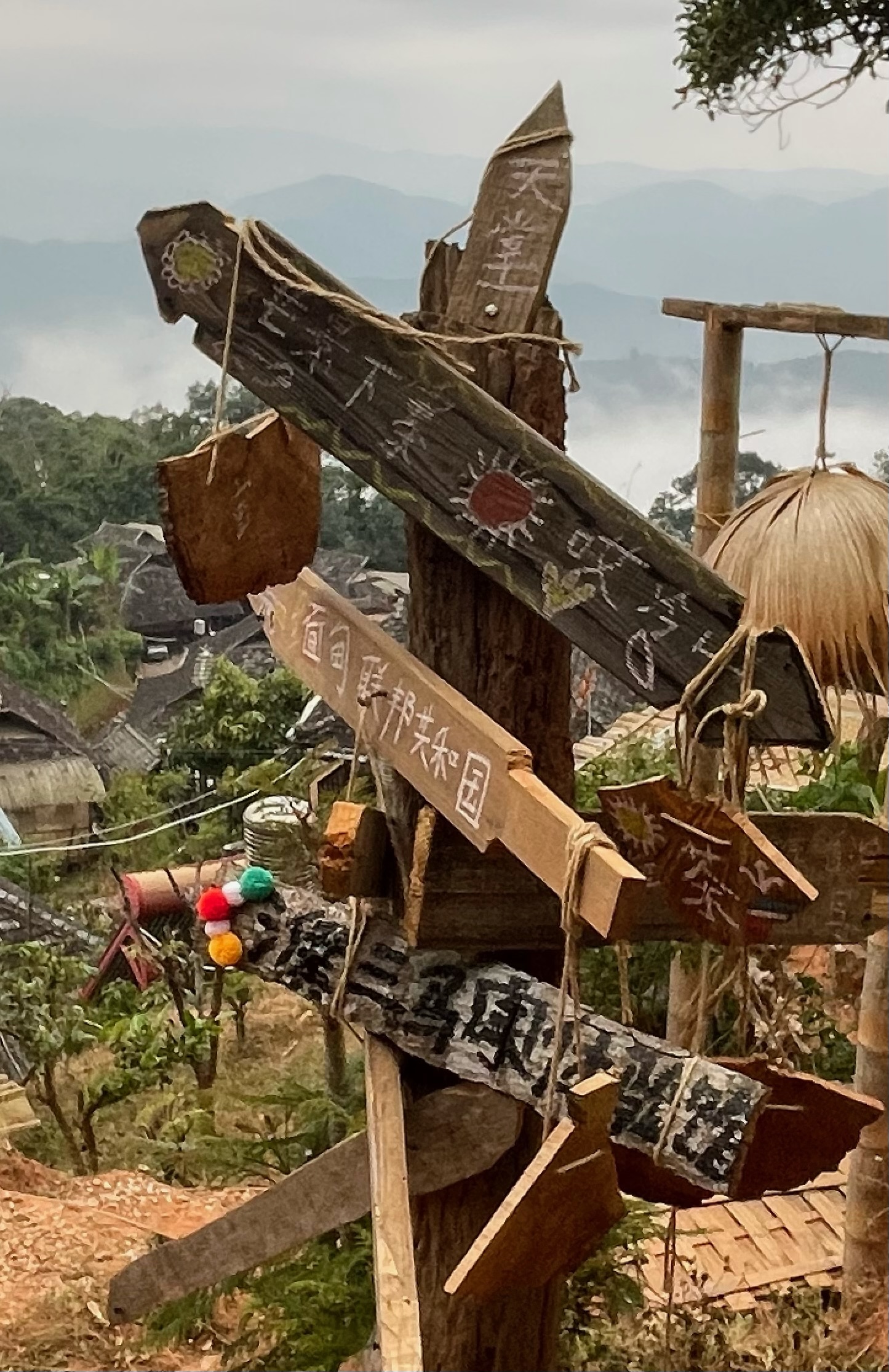
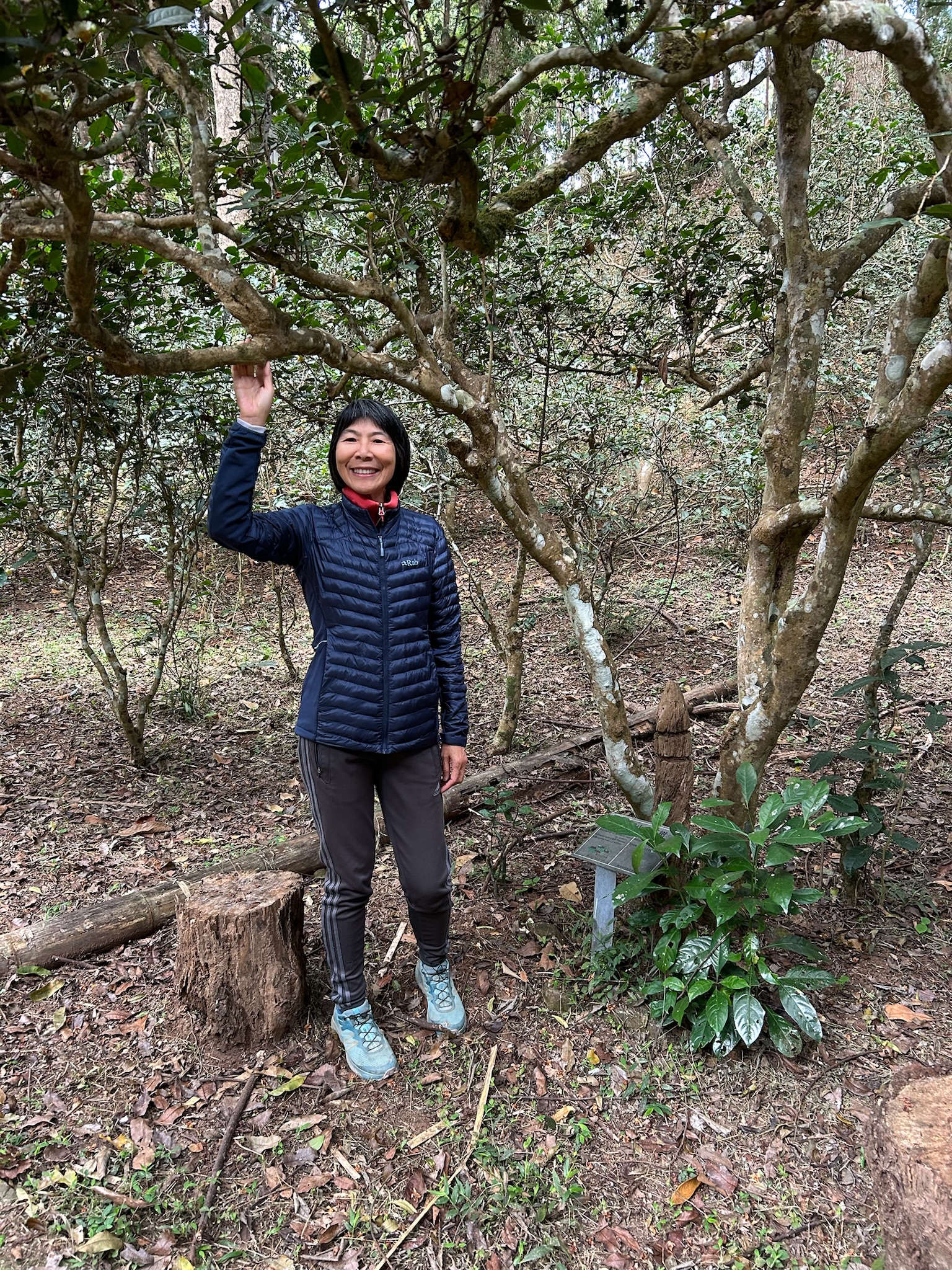


Our host takes us to walk in the famous Jingmai 景迈 tea forest, where many tea trees are over a hundred years old. We are told the king tea tree is 800+ years old!
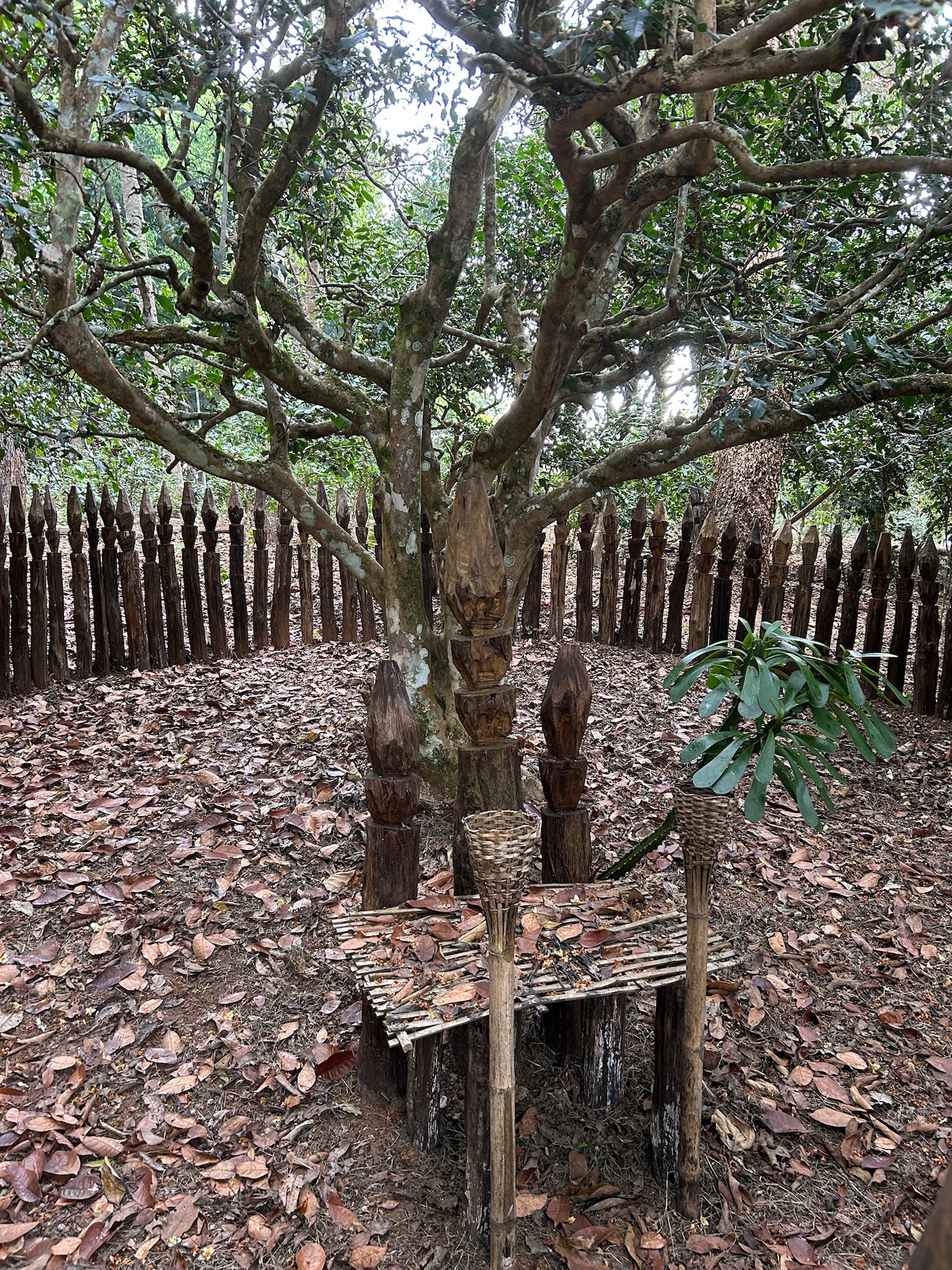
Kammy, being a tree geek, really appreciates the native tribes’ traditional method of growing tea under the tree canopies because this approach avoids deforestation, which is all too common for growing cash crops including tea, sugarcane, and corn in this area (and palm oil in South America).
Our host served for 10 years as the head of his village. He tells us the villagers experimented with clearing a patch of the forest to plant teas and sugarcanes, but quickly returned to the traditional tea growing method and abandoned sugarcanes altogether. This is because the villagers realized they were blessed with the old-growth tea trees their ancestors had planted generations ago as well as the valuable ecological knowledge that is passed down. Therefore the village has collectively decided to continue the tried and true, sustainable method of growing and producing the famous pu’er tea (普洱茶).

In order to supplement their incomes, however, the village has also decided to grow tourism by allowing more bed and breakfasts in the village. The unfortunate side effects from tourism on this once quaint, small village of Jingmai are pretty obvious – shops, stalls, cars and buses line the narrow streets. We really miss the quietude of Manwa Laozhai 曼佤老寨!
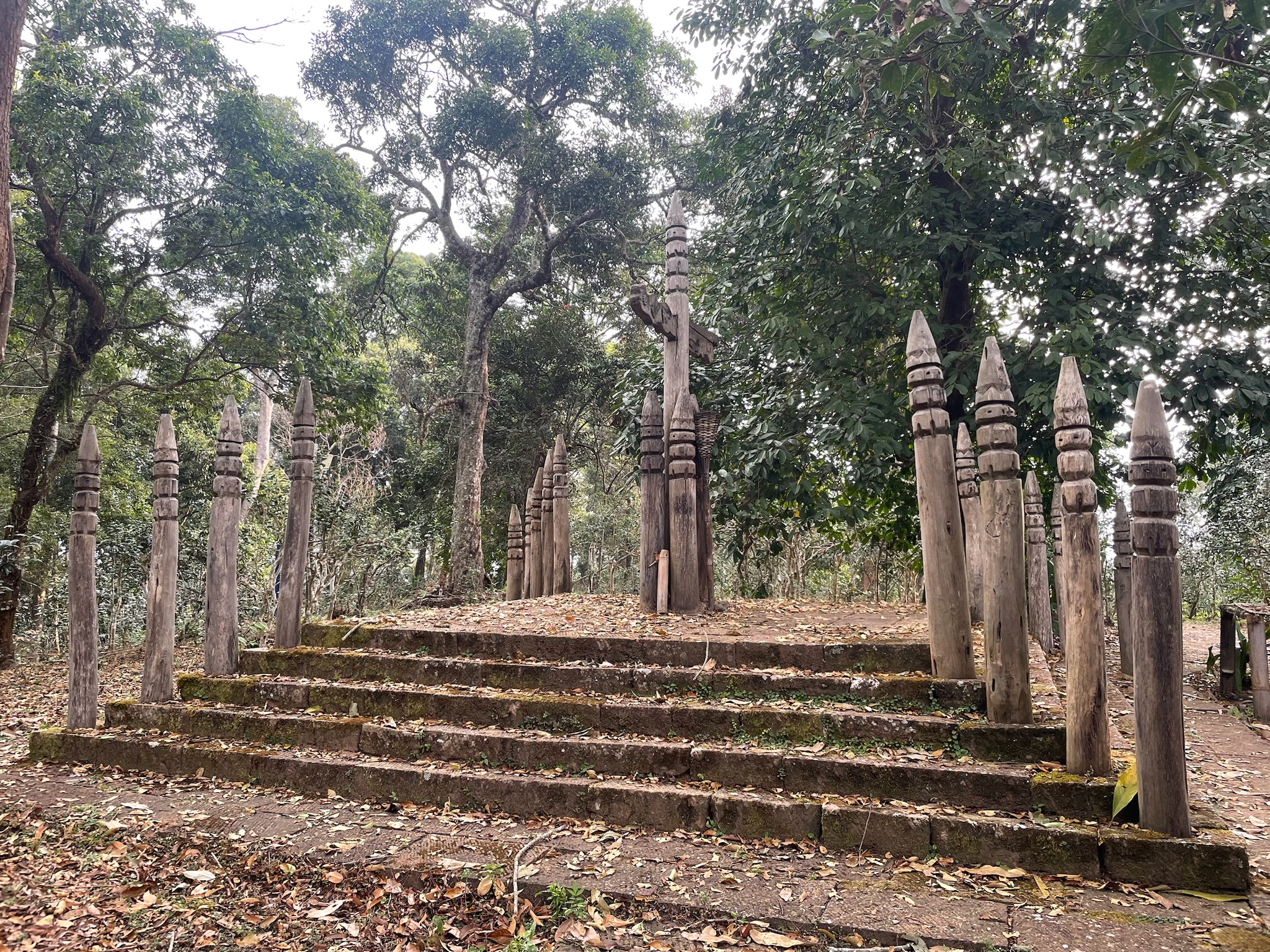
The Tea Spirit Altar is atop the mountain. Our host tells us the location of the altar is not made known to tourists (we are lucky to get an insider’s tour!) for fear of tourists overrunning this sacred place, where villagers pay respect to the Tea Spirit.
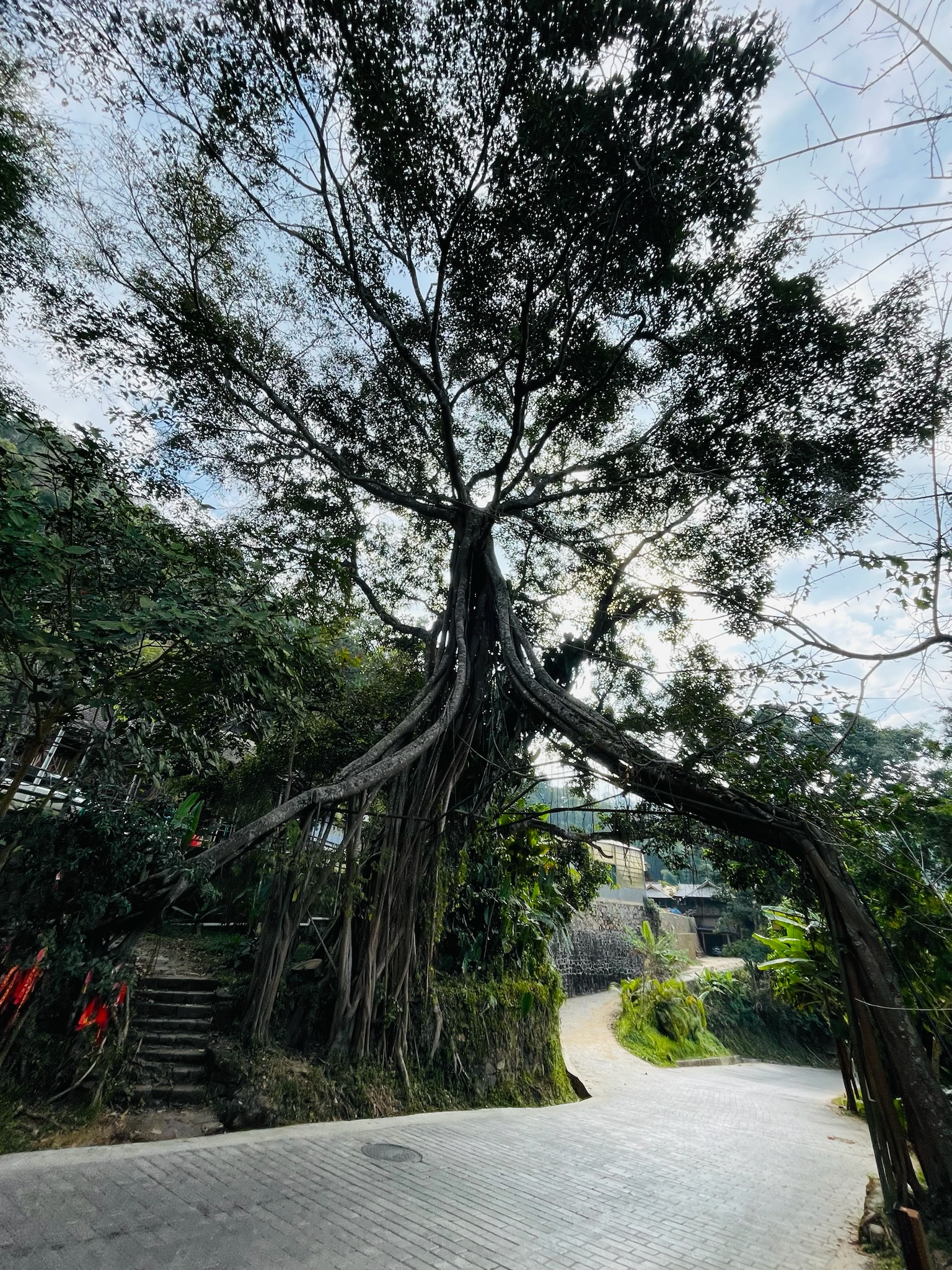
We slowly make our way back to the village, walking past the princess fig tree (the buttress roots apparently look like the princess’ hair!). Legend has it a Thai princess was married into the village, and became the matriarch. Upon her wish, a mango tree and a fig tree, her two favorites from her home, were planted next to her tomb.
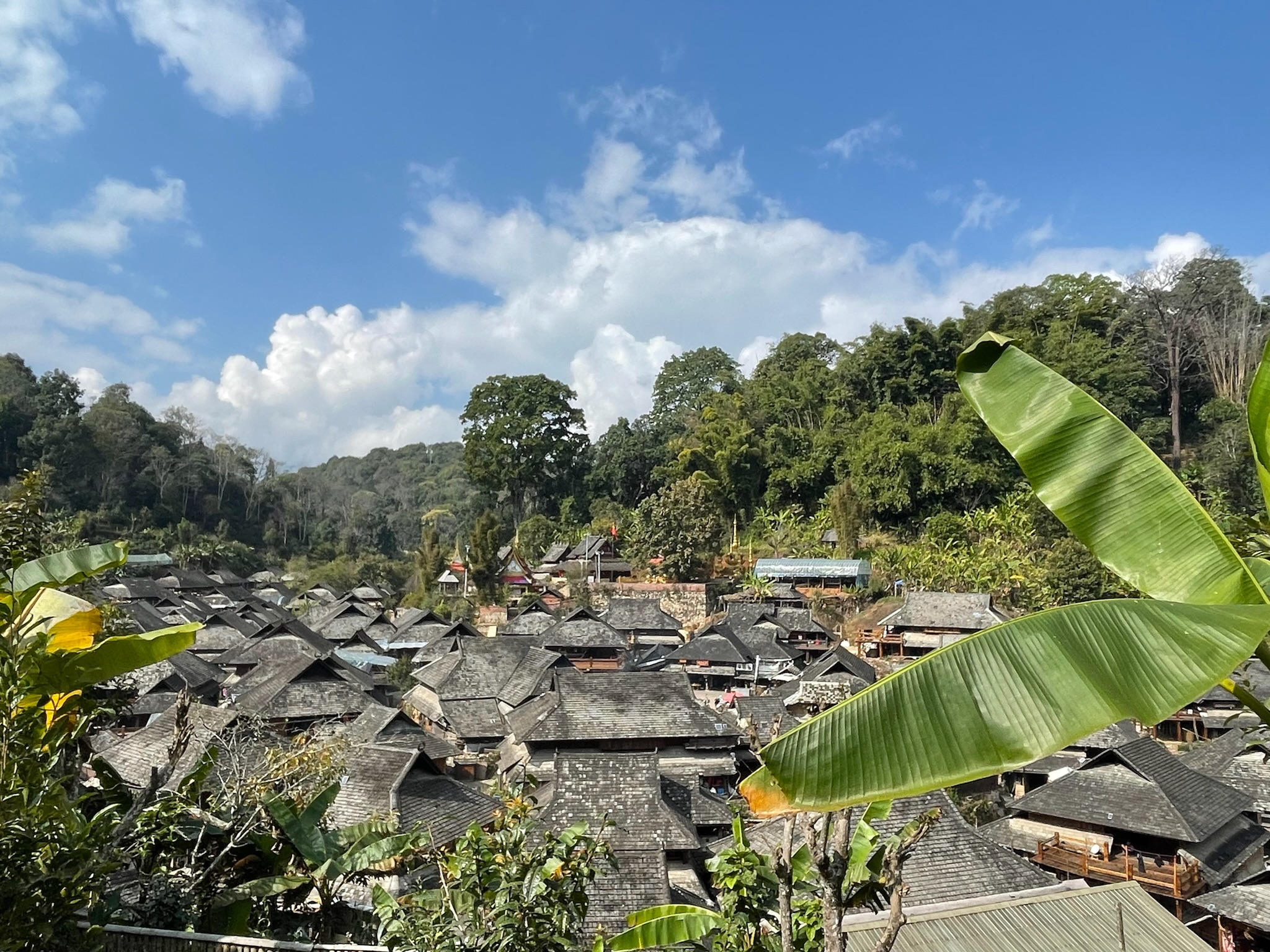
A quick lunch and it’s time to wrap up this adventure. We drive down on the massage road (按摩路) – hand paved stone road that’s quite bumpy – and make our way back to Xishuangbanna to catch our flight next morning. We briefly stop by another “ancient” village, but this (to me), is a far cry from what we’ve already seen in Manwa Laozhai.
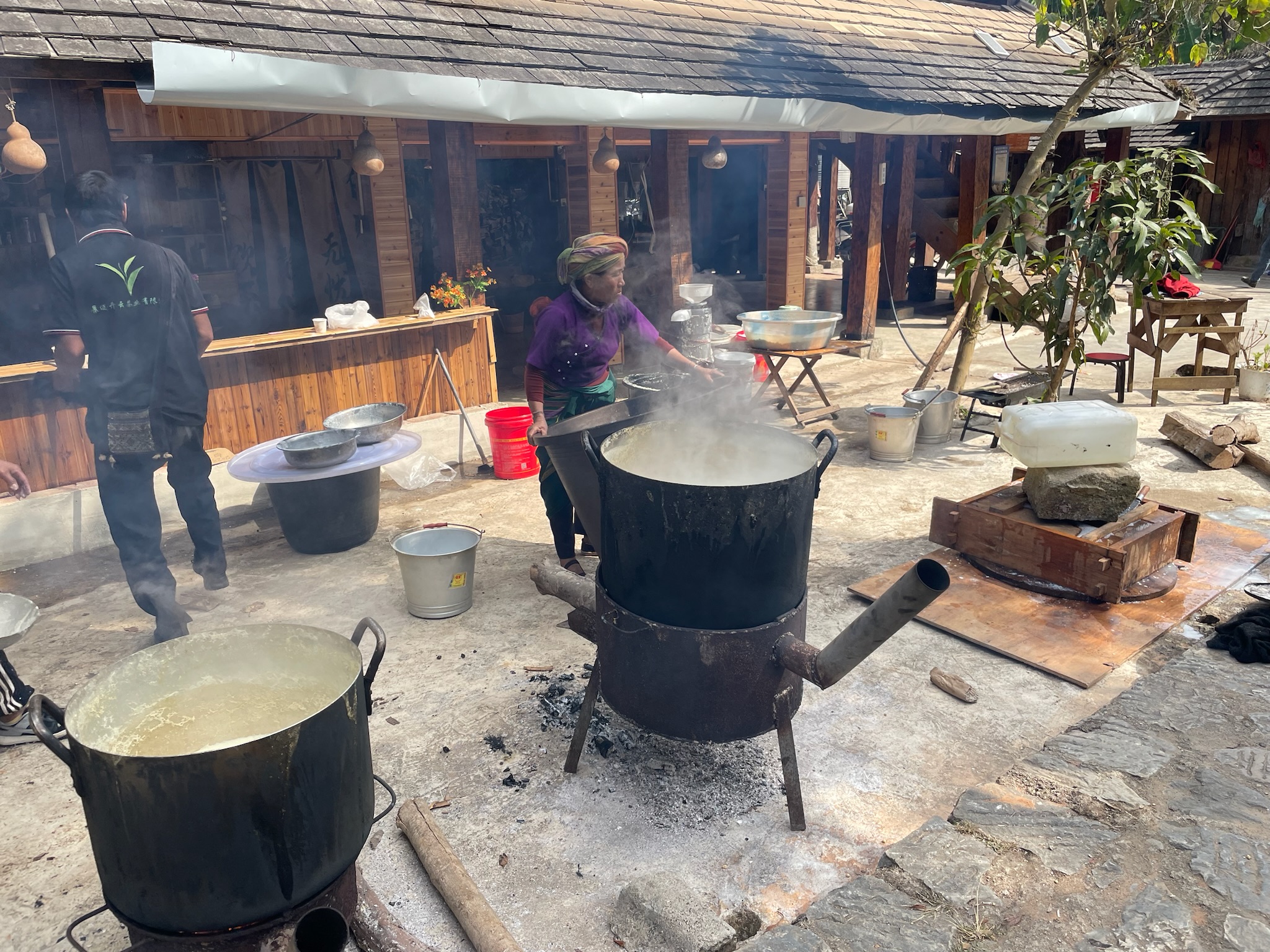
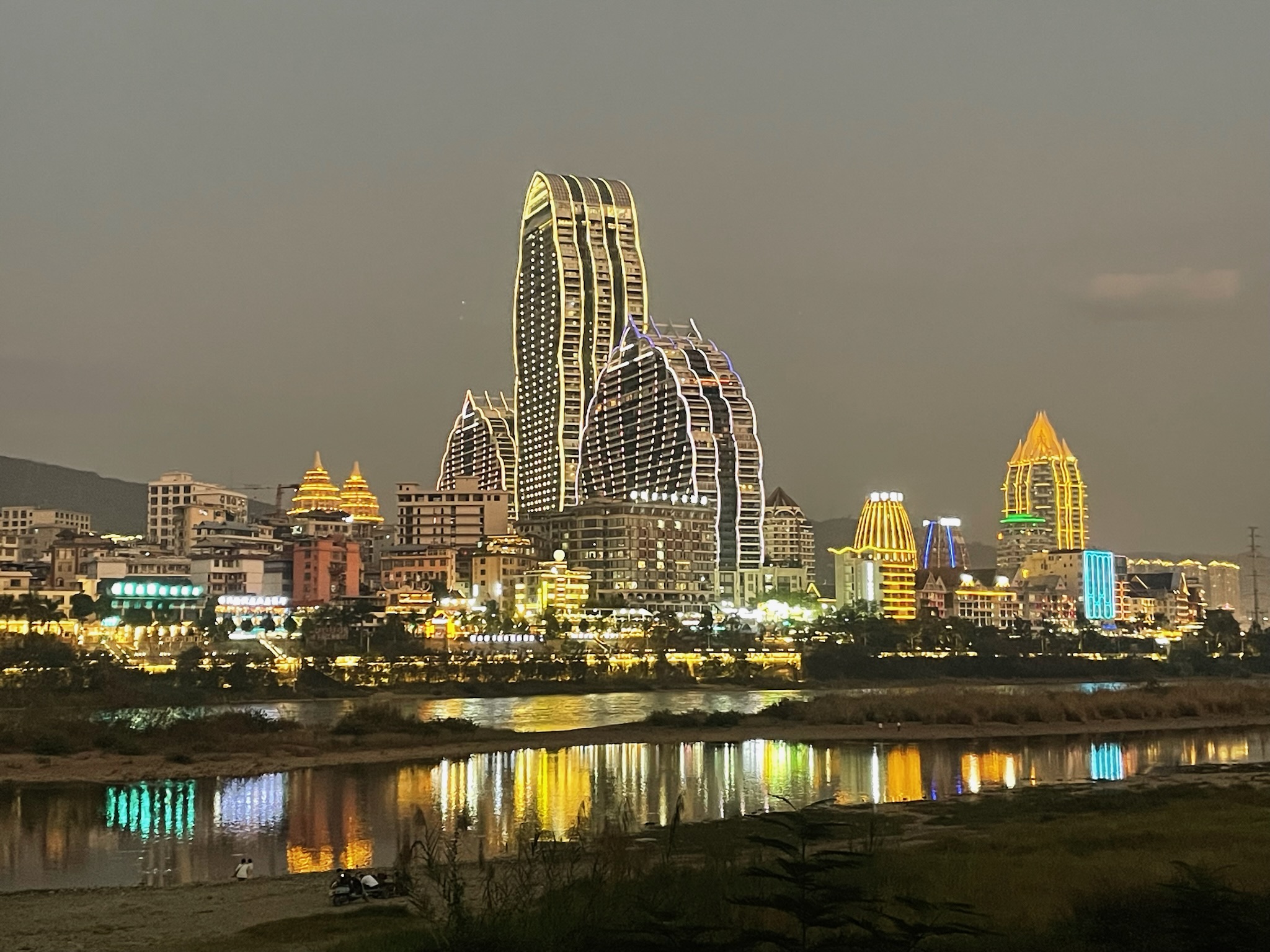
We reach the city of Jinhong (景洪市), capital of Xishuangbanna in the evening. As we walk around the city, I’m overwhelmed by the loudness of the city. The river walk has speakers blasting random announcements, a dude singing loud, cars honking, people in a hurry and curt – have to find a quiet place to reorient myself to this new reality! I miss the bird sounds (鸟声), water sounds (水声) and wind sounds (风声) and most of all being in the mountains.
What started off as a simple blog has ballooned into a six part travelogue series. I didn’t realize how “dense” this trip was. We saw, learned and appreciated so much. It was like visiting a time capsule from simpler times. As I’m finishing the last of these blogs, there’s a tinge of sadness, parting of friends and a reluctance to leave these beautiful mountains. Maybe one day we’ll come back here, or so I hope and wish.
This is a six part travelogue series exploring a section of Yunnan Province in China, from the autonomous prefecture of Xishuangbanna (西双版纳) to the remote village of Manwa Laozhai (曼佤老寨) and finally to the ancient tea forests of Jingmai (景迈).
- Xishuangbanna
- Village of Manwa Laozhai
- Mountains of Manwa Laozhai
- Canyons of Manwa Laozhi
- Ancient tea forests of Jingmai
- The Bulang People
Absolutely N.O. spam. No more than two emails each week. Learn about injury-free running, race reports, new trail routes, awesome recipes and amazing interviews.